
Application engineering
Start from the place. The product follows.
Each design begins with the device, the distance, the load and whether mains exists at the endpoint. That is what decides PoE, PoF, or fibre to a local cabinet.
- Designs
- 12
- Copper limit
- 100 m
- PoF limit
- 200 m
- PON reach
- 20 km

Twelve places, one method
Find the place closest to your project.
The pages are not product catalogues. Each one shows the failure mode, the three power paths, a bill of materials and the numbers to check before quoting.
 01
Application · security
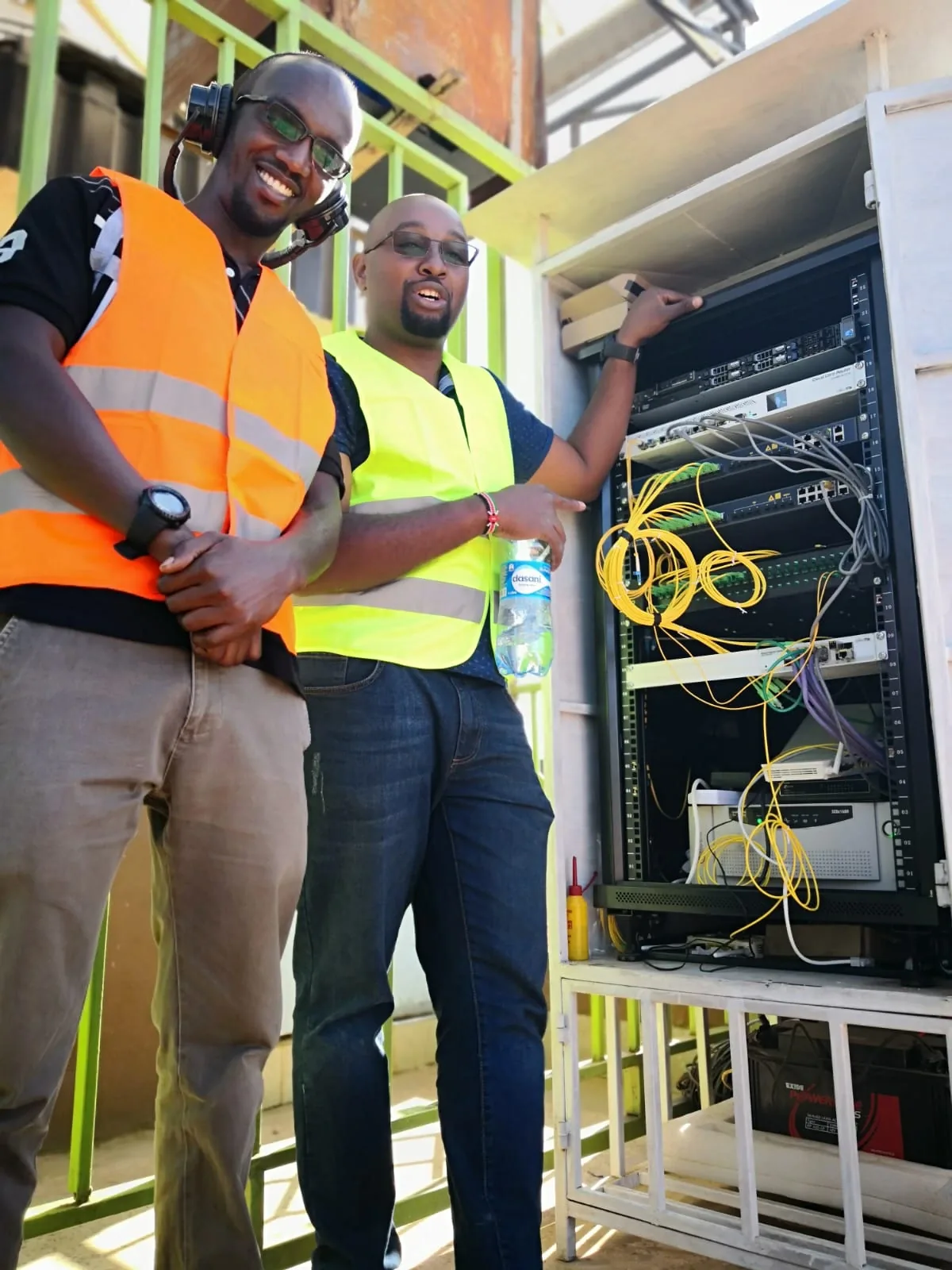
CCTV & Surveillance Power
Cameras beyond the 100 m copper limit, without a local socket.
View the design 02
Application · wireless
Outdoor Wireless Coverage
Ceiling and pole APs without a local mains drop.
View the design 03
Application · parking
Parking Lot Camera System
Pole cameras and lot APs without trenching power.
View the design 04
Application · perimeter
Perimeter Security Power
Long fences, few sockets, one fibre route.
View the design 05
Application · access control
Bollard & Access Control Power
Power at the column, without a mains trench.
View the design 06
Application · campus
Campus Fibre Network
One ODN for buildings, cameras, APs and rooms.
View the design 07
Application · FTTH
FTTH Access Network
From the OLT port to the subscriber ONT.
View the design 08
Application · industrial
Industrial & Tunnel Network
Ring topology, hardened switches, no weak copper.
View the design 09
Application · hospitality
Hotel All-Optical
One fibre to the room: data, TV, voice and corridor Wi-Fi.
View the design 10
Application · education
Classroom All-Optical
One fibre per classroom, Wi-Fi 6 and PoE/PoF for the devices.
View the design 11
Application · wireless
AC + AP Wireless
One AC, many APs, zero-touch provisioning and roaming.
View the design12Application · small business
Small Venue All-Optical
A compact all-optical kit for 4–32 rooms or zones.
View the designPath matrix
Which path usually wins.
| Application | Typical distance | Typical load | Usual path | Watch-out |
|---|---|---|---|---|
| CCTV on poles | 100–300 m | 8–12 W fixed; 25–60 W PTZ | PoE within 100 m; PoF for 100–200 m | PTZ heater exceeds 12 W |
| Outdoor wireless | 100–200 m | 10–15 W | PoF ceiling ONU | Check peak radio load |
| Parking lot | 100–400 m | 8–40 W | Fibre to cabinet + PoE; PoF for isolated poles | LPR illuminator load |
| Perimeter | 200–1,000 m | 8–50 W | Fibre ring + local switch; PoF for low-power points | Surge and ring recovery |
| Bollard / access | 50–200 m | 5–20 W | PoF for reader/intercom; mains for motor | Motor is not a PoF load |
| Campus | 200 m–2 km | Mixed | PON backbone + building PoE + PoF edge | Optical budget per building |
| FTTH | 1–20 km | Per subscriber | OLT + 1:32/1:64 + ONT | Split ratio vs 3 dB margin |
| Industrial / tunnel | 500 m–several km | Mixed | Fibre ring + hardened PoE | Cabinet temperature |
| Hotel & hospitality | 20 m–200 m per floor | 10–15 W AP; room ONT | PON to room; PoF/PoE corridor | CATV/POTS and corridor power |
| Classroom & campus | 100 m–2 km | 10–15 W AP | PON to classroom + PoE/PoF edge | AP per room, not corridor only |
| AC + AP wireless | 20–100 m per AP | 10–30 W AP | PoE within 100 m; PoF 100–200 m | AP count and roaming |
| Small venues | 20–200 m | 5–20 W | Compact OLT + PoE/PoF | Guest/payment VLAN |
Application FAQ
Application questions before the site visit.
If your question is not here, send the site details and we will answer with the calculation, not a brochure.
Ask an engineerHow do I know which application page applies to my site?
Start from the place and the device, not from the product. A camera on a pole, an AP above a ceiling, a reader at a gate and a room ONT are four different power problems. The eight pages cover the common place types; if your site is a mix, the design method is the same.
Can I use PoF for a camera that needs 30 W?
No. The PoF port is rated to 12 W. A 30 W PTZ camera with a heater needs a local PoE switch or a mains feed. PoF is for low-power endpoints: fixed cameras, APs, readers and sensors.
Is there a design for a hotel or a dormitory?
The campus and FTTH designs cover the room distribution, and the PoF page covers the corridor ceiling APs. For a hotel, the typical chain is a GPON OLT, 1:32 splitters, room ONTs with CATV/POTS and a PoF or PoE corridor AP group.
What if the site has both copper and no-mains endpoints?
Separate the power domains: a PoE switch for the copper group and a PoF splitter for the no-mains group. Both can uplink to the same OLT or core switch, but the budgets are calculated separately.
Do you provide the optical and power calculation with the design?
Yes. Each application page shows the path comparison and a bill of materials; the quotation adds the worst-case optical budget, the PoE/PoF load and the assumptions used.
How do I choose between PoE, PoF and fibre on a mixed site?
Use three inputs: distance from the nearest powered cabinet, load per endpoint and whether mains exists at the endpoint. Inside 100 m with mains, PoE is usually cheapest. From 100 to 200 m without mains and under 12 W per port, PoF fits. For clusters or loads above 12 W, run fibre to a local PoE switch.
Next step
Send the place, the device and the distance.
A rough sketch is enough. We will tell you which path fits, what the load budget is and which parts are missing from the drawing.
No obligation. The plan states its assumptions so your engineer can check it.