
PON access · OLT
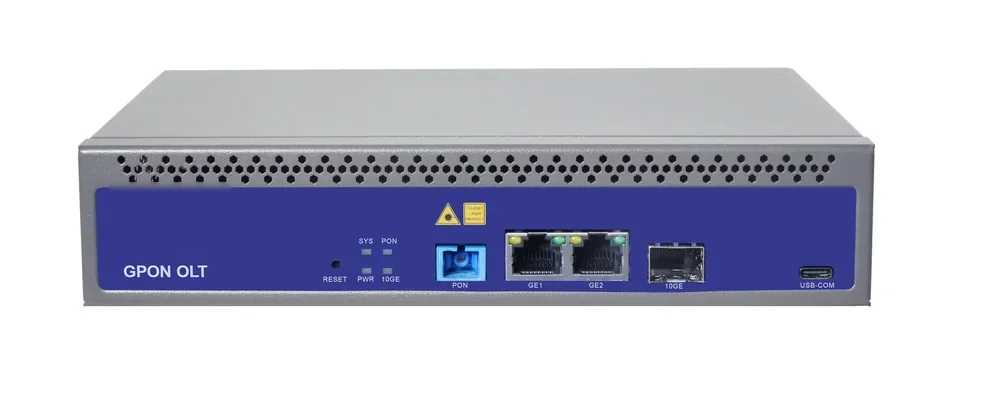
GPON OLT
GPON OLT platforms for FTTH, campus and hotel access: 2.5 Gbps downstream and 1.25 Gbps upstream, 1:64 split per PON port and 20 km reach on Class B+ optics. Configurations run from a compact 1-PON gateway with built-in AC to a chassis with up to 112 PON ports.
Updated October 24, 2026
- Line rate
- 2.5 Gbps ↓ / 1.25 Gbps ↑
- Max split
- 1:64 per PON port
- Reach
- 20 km, Class B+
- PON ports
- 1 – 112
The short answer
What this product is specified for.
Included in the quotation
- Port count, connector polish and power configuration
- Model-level datasheet and test data
- Optical budget and splitter plan for the ODN
- Export packing, HS code and Incoterm
A GPON OLT is the headend of a passive optical access network. It terminates the PON fibre, assigns bandwidth to each ONU and hands traffic to the carrier or campus core over Ethernet or 10G/100G uplinks. GPON carries 2.5 Gbps downstream and 1.25 Gbps upstream, with 1:64 splitting on a standard port and 20 km reach on Class B+ optics. Those three numbers decide how many subscribers a single port can serve and how far the ODN can run before an active cabinet is needed.
The platform has to match the site, not the other way round. A 20-room hotel, a clinic or a small office block needs one PON port and a handful of ONUs; a campus or an ISP edge needs 8 to 16 ports; a district FTTH headend needs a chassis that can grow past 32 ports without replacing the uplink. We specify the PON port count from the ONU count and the splitter plan, then confirm the uplink, management and power options before quoting.
Every quotation states the PON port count, uplink mix, split ratio per port, ONU compatibility list and the management path (OMCI, SNMP, CLI or web). Model codes and the model-level datasheet are attached to the quotation so the integrator can check firmware, optical budget and rack space before placing the order.
Configuration table
The numbers that decide the fit.
Values are from the model datasheet. Where a value is model-dependent, the table says so instead of guessing.
| Platform | PON ports | Uplinks | Typical deployment |
|---|---|---|---|
| Compact GPON gateway | 1 | 2× GE RJ45 + 1× 10GE SFP+ | Small hotel, clinic, shop, PoF gateway |
| 2-slot chassis | Up to 32 | 2× 100GE QSFP28 | Campus, estate, ISP edge |
| 7-slot chassis | Up to 112 | 2× 100GE QSFP28 | District FTTH headend |
Port counts depend on the service-board mix. Confirm the exact board, uplink and power configuration on the quotation.
Engineering features
What changes on site.
Port count follows the ODN
Size from ONU count and split ratio, not from a catalogue headline. A 1:64 port at 60% fill serves about 38 ONUs; plan the next splitter before the port is full.
20 km optical budget
Class B+ optics and 1:64 PLC splitting leave enough margin for connectors, splices and a 3 dB ageing reserve on a 20 km link.
L2/L3 control
VLAN, QinQ, IGMP snooping, DHCP snooping, ACL, static routing and RIP/OSPF keep IPTV, CCTV and guest traffic separated on one ODN.
One management path
OMCI for ONUs, SNMP and CLI for the OLT, web for local commissioning. The same VLAN plan can be pushed to every ONU profile.
AC and DC power
AC 100–240 V for premises; −48 V DC and dual-power options for telecom rooms and sites with battery plants.
Grows without a fork-lift
Start with the ports the first phase needs and add boards as the ODN fills; the uplink and management model stay the same.
Selection guide
Which configuration fits which site.
Start from the site, not from the model. The table is a starting point; the final check is the optical and power budget.
| Site type | ONTs / subscribers | Recommended starting point |
|---|---|---|
| Hotel, clinic, shop | 8 – 32 | 1-PON gateway + 1:8 or 1:32 splitter |
| Campus, estate, office park | 32 – 256 | 8–16 PON chassis + 1:32/1:64 splitters |
| District FTTH headend | 256 – 2,048 | 32–112 PON chassis + 1:64 splitters |
Sizing assumes 50–70% splitter fill and one ONU per subscriber. Video and CCTV VLANs need their own bandwidth plan.
Integration
Where it sits in the chain.
The PON chain starts at the OLT port, passes through the splitter and the ODN, and ends at the ONU. The split ratio and the connector count decide the optical margin.
- One bill of materials for the whole chain
- Connector polish and PON mode confirmed before order
- Model-level test data supplied with the shipment
Related equipment
Complete the chain.
The product is quoted as part of a chain. These are the parts that usually travel with it.
PON access · ONU / ONT
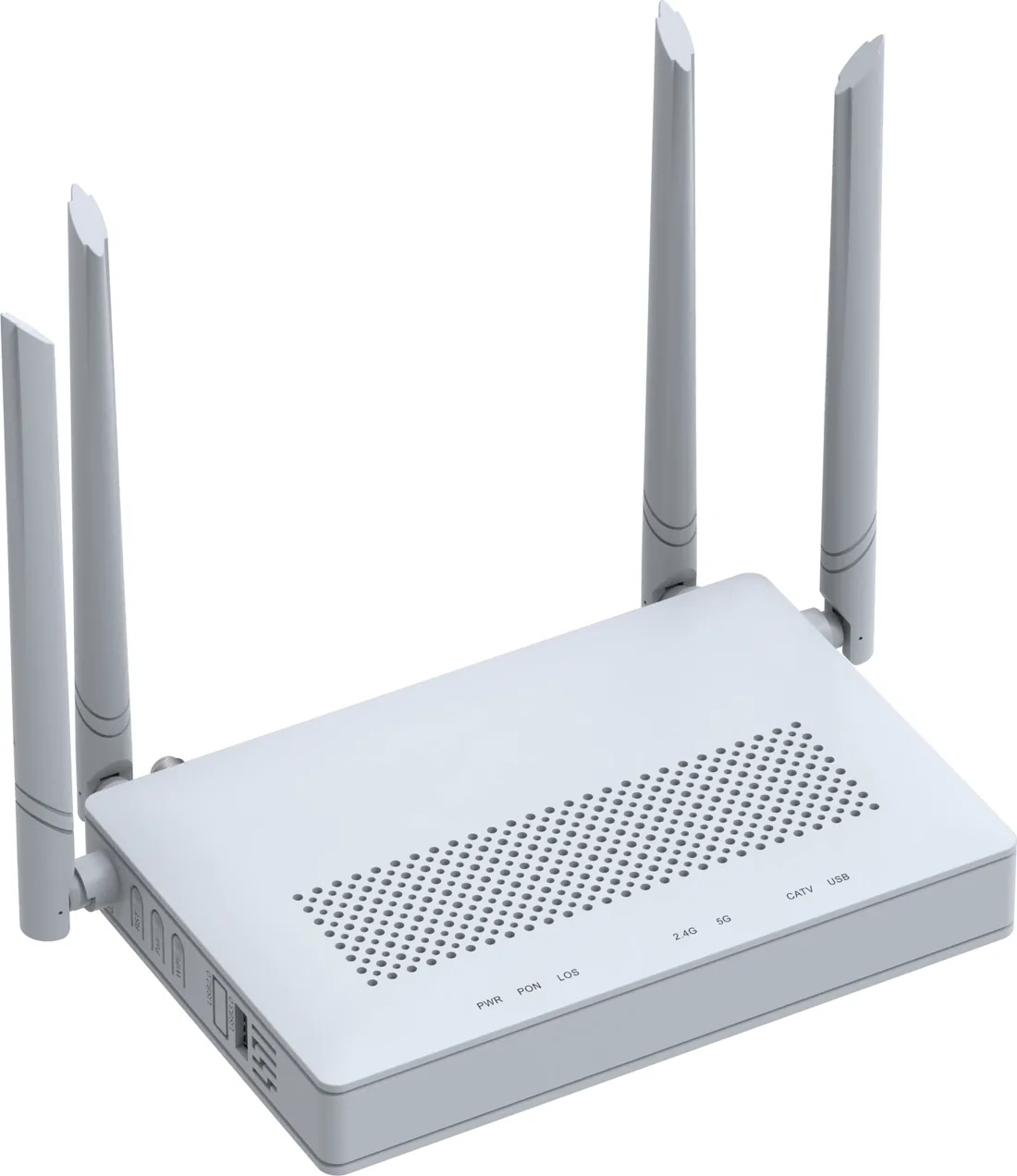
GPON / XPON ONU & ONT
From a 1-GE bridge to a 4-GE Wi-Fi 6 gateway.
XPON ONU and ONT options for FTTH, hotel rooms, offices and outdoor cabinets: 1, 2 or 4 GE ports, Wi-Fi 4/5/6, CATV and POTS options, and 10G PON models. All units are SC single-mode, 20 km, EPON/GPON dual-mode where the model supports it.
- PON
- XPON, EPON/GPON
- User ports
- 1 – 4 × GE
- Wi-Fi
- Wi-Fi 4 / 5 / 6
- Reach
- 20 km
Best for FTTH Access Network · Campus Fibre Network · Outdoor Wireless Coverage
View specifications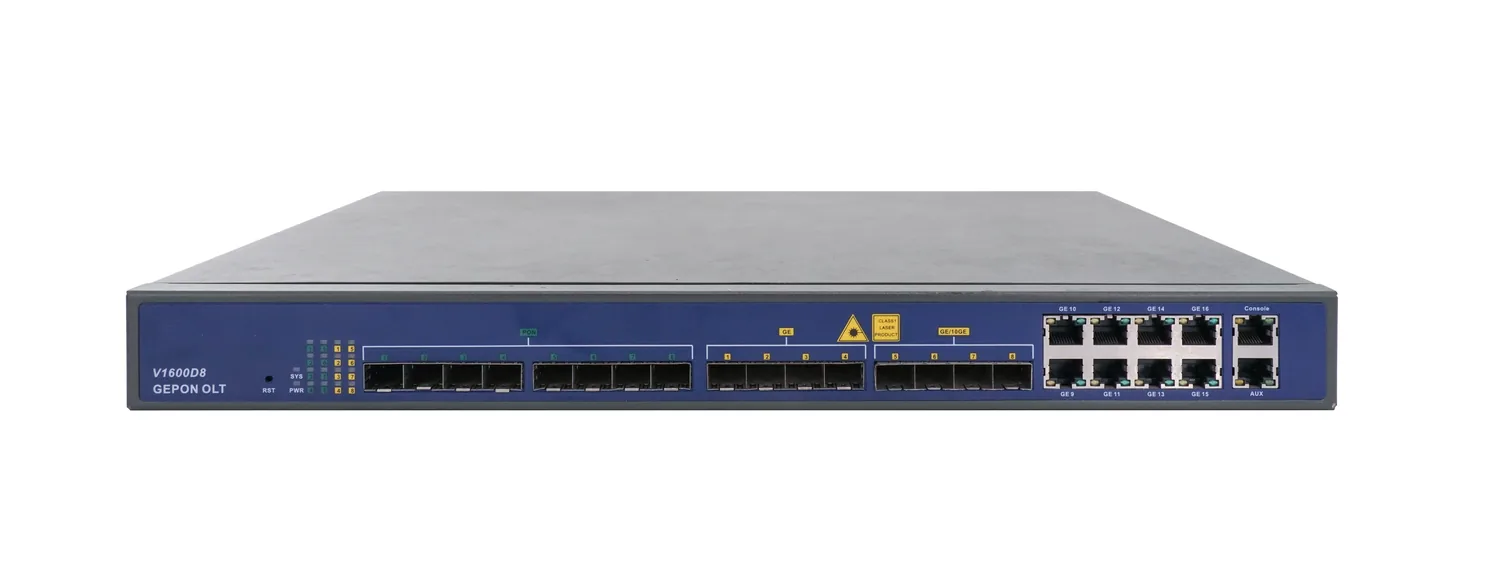
PON access · OLT
8-Port EPON OLT
1U, eight EPON ports, up to 512 ONUs.
A 1U EPON OLT with eight PON ports, 16 uplink ports and a 128 Gbps backplane. It supports 1:64 splitting, 20 km reach and up to 512 ONUs, making it a compact headend for CCTV, campus and small FTTH networks.
- PON ports
- 8 × EPON
- Line rate
- 1.25 Gbps symmetric
- Max ONUs
- 512 (64 per port)
- Backplane
- 128 Gbps
Best for CCTV & Surveillance Power · Campus Fibre Network · FTTH Access Network
View specifications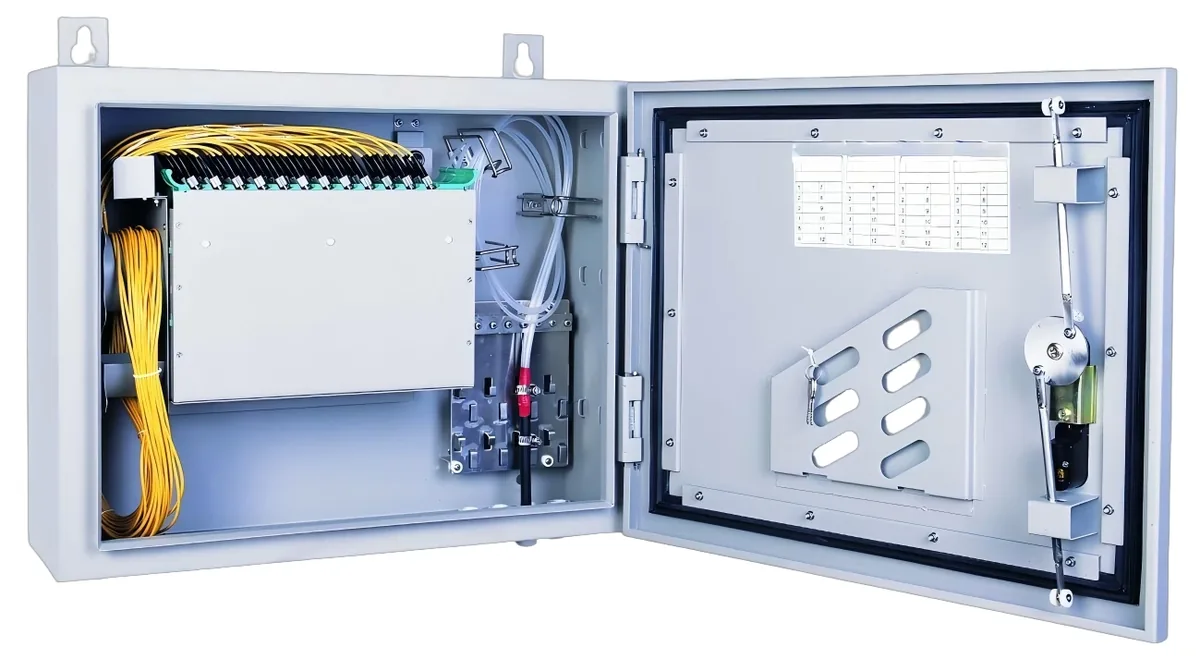
PON access · ODN
Fiber Optic Splitter (PLC)
1×2 to 1×64, SC/UPC or SC/APC.
Planar lightwave circuit splitters from 1×2 to 1×64 for PON ODN construction. Typical insertion loss runs from 3.6 dB at 1×2 to 20.5 dB at 1×64; each batch ships with test data and the connector polish you specify.
- Ratios
- 1×2 – 1×64
- Wavelength
- 1260 – 1650 nm
- Insertion loss
- 3.6 – 20.5 dB
- Connector
- SC/UPC / SC/APC
Best for FTTH Access Network · Campus Fibre Network · CCTV & Surveillance Power
View specifications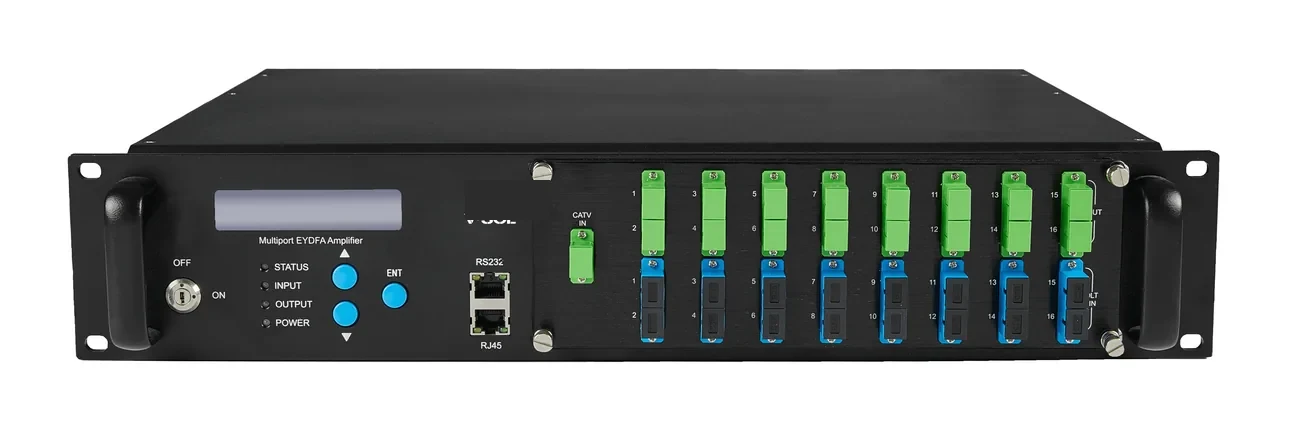
Optical transmission · 1550 nm
EDFA & 1550 nm Transmitter
CATV overlay and long-haul 1550 nm transport.
1550 nm optical transmitters and erbium-doped fibre amplifiers for CATV overlay and long-distance transport: direct-modulated 10 dBm and external-modulated 7/9 dBm transmitters, plus 4/8/16/32-port EDFA units at 19/22 dBm.
- Wavelength
- 1550 nm
- EDFA ports
- 4 / 8 / 16 / 32
- Output power
- 19 / 22 dBm
- Transmitter
- 7 / 9 / 10 dBm
Best for Campus Fibre Network · FTTH Access Network
View specificationsProduct FAQ
GPON OLT: questions before the order.
If your question is not here, send the site details and we will answer with the calculation, not a brochure.
Ask an engineerHow many ONUs can one GPON port serve?
Up to 64 ONUs at a 1:64 split ratio. In practice plan for 50–70% fill, so 32–45 active ONUs per port, to leave room for retries, spare capacity and future subscribers.
GPON or EPON for a new project?
GPON gives 2.5 Gbps downstream and 1.25 Gbps upstream and is the usual choice where ONU supply and ISP handover are GPON. EPON gives symmetric 1.25 Gbps and is often cheaper for CCTV and smaller private networks. Choose the one your ONU stock and existing headend already use.
What is the difference between the compact gateway and the chassis?
The compact gateway has one PON port, two GE ports and one 10GE SFP+ uplink; it is for a single building or a PoF deployment. The chassis holds service boards and scales to 32 or 112 PON ports with 100GE uplinks for campus and district networks.
Can the OLT feed a CATV overlay?
Yes. A 1550 nm CATV signal can be combined onto the same ODN with a WDM coupler and received by an ONU with a CATV port. The OLT itself does not generate CATV; the transmitter and EDFA sit beside it.
What optical budget should I reserve?
For a 1:64 split, the splitter alone takes about 20.5 dB. Add 0.3–0.5 dB per connector pair, 0.1 dB per splice and a 3 dB ageing margin, then check the result against the OLT transmit power and ONU sensitivity. We return the calculation with the BOM.
Do you supply the ONUs and splitters with the OLT?
Yes. The OLT, ONUs, PLC splitters, ODF and enclosures are quoted as one bill of materials so the split ratio, connector type and management profile match. Model-level compatibility is confirmed before shipment.
What is the lead time?
Stock and production lead time are confirmed on the quotation because they depend on the port count, board mix and destination. Sample quantities usually ship first; project quantities are scheduled against the ODN build.
Next step
Need a GPON OLT configuration checked?
Send the endpoint count, the longest run, the power condition and the destination. We reply with the configuration, the optical/power budget and the quotation assumptions.
No obligation. The plan states its assumptions so your engineer can check it.