
Optical transmission · receiver
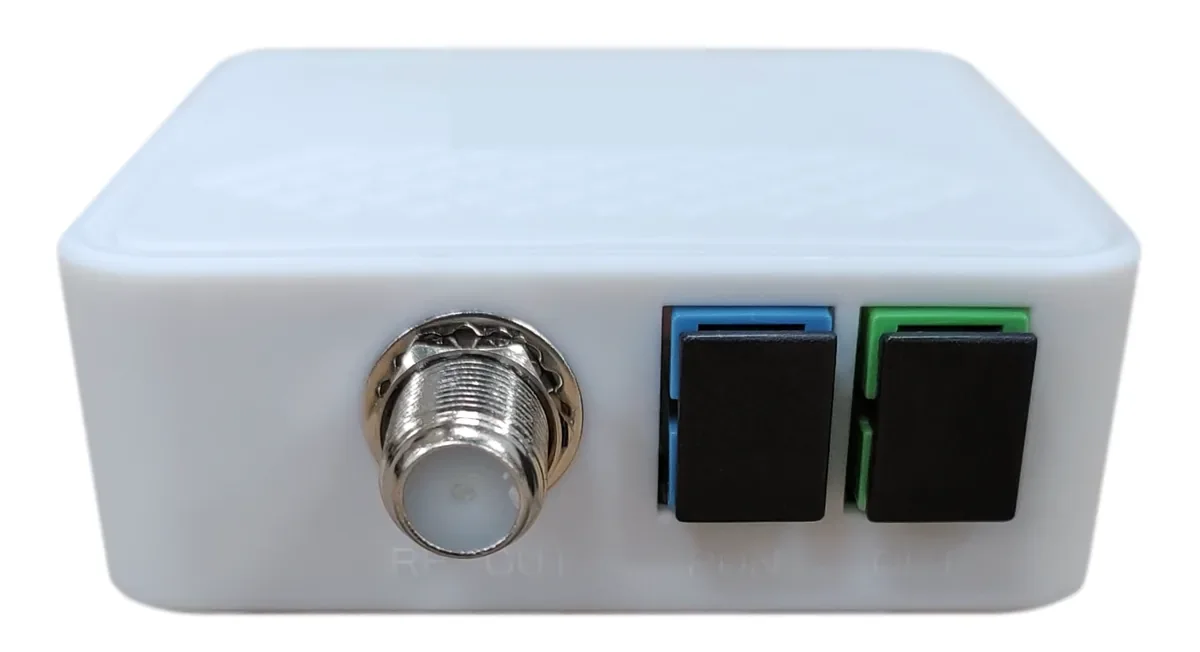
CATV Optical Receiver
CATV optical receivers for FTTH and building distribution: 1550 nm input, 47–1000 MHz RF output, 75 Ω, AGC options and +2 to −18 dBm input range. Models with PON and CATV ports are available for triple-play ONUs.
Updated October 24, 2026
- Wavelength
- 1550 ± 10 nm
- Input range
- +2 to −18 dBm
- RF band
- 47–1000 MHz
- Impedance
- 75 Ω
The short answer
What this product is specified for.
Included in the quotation
- Port count, connector polish and power configuration
- Model-level datasheet and test data
- Optical budget and splitter plan for the ODN
- Export packing, HS code and Incoterm
A CATV optical receiver converts the 1550 nm CATV signal back to RF at the subscriber or the building. It is the counterpart to the transmitter and EDFA at the headend. The receiver input range is narrow: too much optical power saturates the RF stage, too little degrades the MER. The design must keep the optical input inside the +2 to −18 dBm window.
The family includes a standalone receiver with one optical input and one RF output, and triple-play versions that combine a 1550 nm CATV receiver with a PON port in the same ONU. The RF output covers 47–1000 MHz at 75 Ω, with AGC holding the level as the optical input drifts. The receiver is typically used in a hotel, an MDU or a building distribution box where the CATV signal is separated from the data PON.
The RF and optical budgets are linked. A receiver with AGC maintains about 81 ± 2 dBµV over its AGC window; outside that window the level drops. Plan the transmitter power, EDFA output, split ratio and receiver input together, and leave margin for connector and splice loss. A receiver that works on the bench can still fail at the last split if the optical input is below the AGC range.
Configuration table
The numbers that decide the fit.
Values are from the model datasheet. Where a value is model-dependent, the table says so instead of guessing.
| Configuration | Optical ports | RF output | AGC | Typical use |
|---|---|---|---|---|
| Standalone receiver | 1× 1550 nm | 1× RF | Optional | Building distribution |
| Receiver + PON | 1× OPT + 1× PON | 1× RF | Optional | Triple-play ONU |
| Receiver + PON + CATV | 1× OPT + 1× PON + 1× CATV | 1× RF | Yes | Hotel / MDU |
Input range, AGC window, output level and connector are model-specific. Confirm the receiver and transmitter as one budget.
Engineering features
What changes on site.
AGC
Automatic gain control holds the RF level as the optical input drifts; confirm the AGC window on the datasheet.
RF output
47–1000 MHz at 75 Ω, with ≥81 ± 2 dBµV in the AGC range for the CATV models.
MER
MER ≥32 dB at −14 dBm input; check the receiver at the actual optical input, not the nominal power.
PON + CATV
Triple-play models combine a PON port and a 1550 nm CATV receiver in one ONU.
Return loss
≥40 dB return loss at the optical input; keep connectors clean and match the polish.
Budget check
Verify the optical input stays within +2 to −18 dBm across the split and temperature range.
Selection guide
Which configuration fits which site.
Start from the site, not from the model. The table is a starting point; the final check is the optical and power budget.
| Site | Recommended | Watch-out |
|---|---|---|
| Hotel / MDU | Receiver + PON + CATV, AGC | Check the receiver input at the last room |
| Building distribution | Standalone receiver | RF level and split loss |
| FTTH triple-play | Receiver + PON ONU | PON and CATV budgets are separate |
| Long CATV span | Receiver + EDFA | Do not exceed +2 dBm input |
The CATV receiver input range is narrow; a 3 dB error at the headend can put the last receiver outside the AGC window.
Applications
Where this product is used.
Related equipment
Complete the chain.
The product is quoted as part of a chain. These are the parts that usually travel with it.
Optical transmission · transmitter
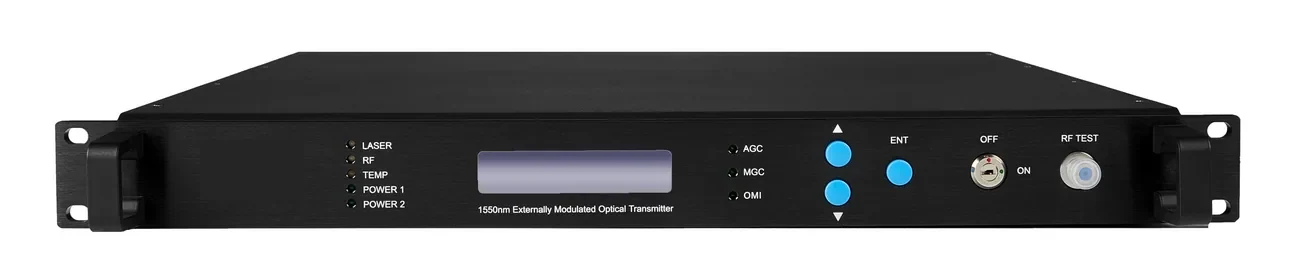
1550 nm Optical Transmitter
Direct 10 dBm and external 7/9 dBm.
1550 nm transmitters for CATV overlay and long-haul transport: direct-modulated 10 dBm and externally modulated 7/9 dBm units, with 47–1000 MHz RF input and optical output for EDFA chains.
- Wavelength
- 1550 nm
- Output
- 7 / 9 / 10 dBm
- Modulation
- Direct / external
- RF
- 47–1000 MHz
Best for FTTH Access Network · Campus Fibre Network
View specifications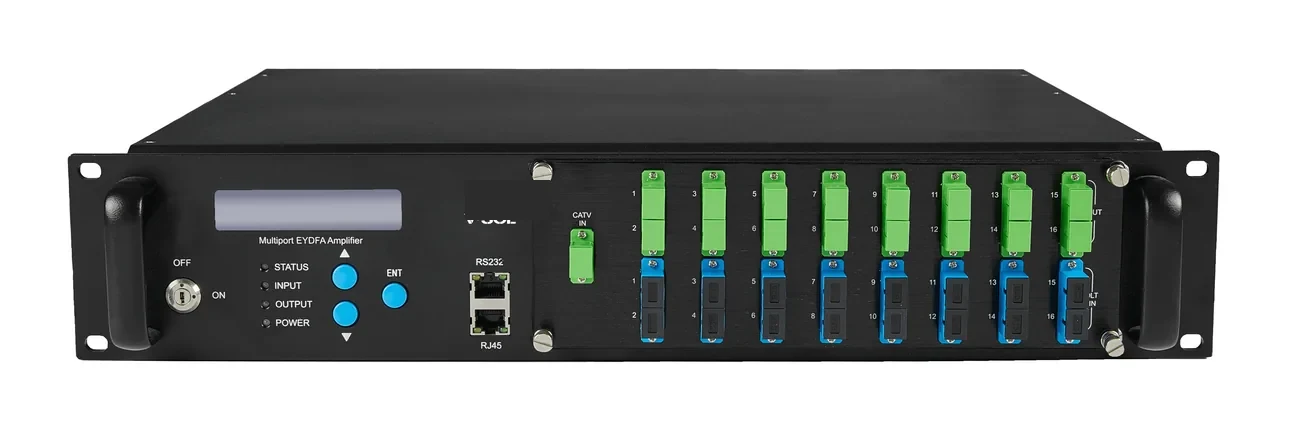
Optical transmission · 1550 nm
EDFA & 1550 nm Transmitter
CATV overlay and long-haul 1550 nm transport.
1550 nm optical transmitters and erbium-doped fibre amplifiers for CATV overlay and long-distance transport: direct-modulated 10 dBm and external-modulated 7/9 dBm transmitters, plus 4/8/16/32-port EDFA units at 19/22 dBm.
- Wavelength
- 1550 nm
- EDFA ports
- 4 / 8 / 16 / 32
- Output power
- 19 / 22 dBm
- Transmitter
- 7 / 9 / 10 dBm
Best for Campus Fibre Network · FTTH Access Network
View specifications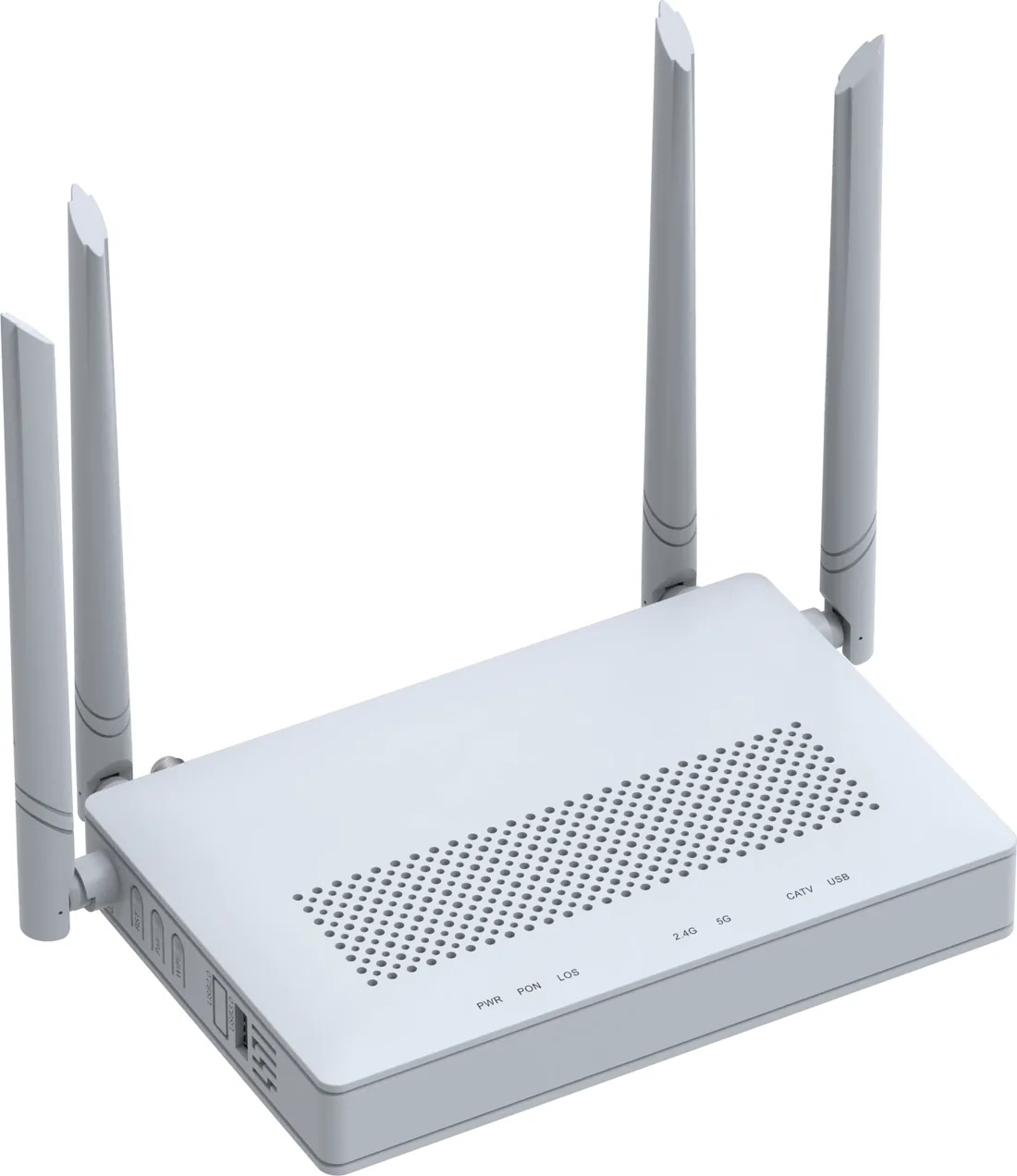
PON access · ONU / ONT
GPON / XPON ONU & ONT
From a 1-GE bridge to a 4-GE Wi-Fi 6 gateway.
XPON ONU and ONT options for FTTH, hotel rooms, offices and outdoor cabinets: 1, 2 or 4 GE ports, Wi-Fi 4/5/6, CATV and POTS options, and 10G PON models. All units are SC single-mode, 20 km, EPON/GPON dual-mode where the model supports it.
- PON
- XPON, EPON/GPON
- User ports
- 1 – 4 × GE
- Wi-Fi
- Wi-Fi 4 / 5 / 6
- Reach
- 20 km
Best for FTTH Access Network · Campus Fibre Network · Outdoor Wireless Coverage
View specifications
PON access · ODN
Fiber Optic Splitter (PLC)
1×2 to 1×64, SC/UPC or SC/APC.
Planar lightwave circuit splitters from 1×2 to 1×64 for PON ODN construction. Typical insertion loss runs from 3.6 dB at 1×2 to 20.5 dB at 1×64; each batch ships with test data and the connector polish you specify.
- Ratios
- 1×2 – 1×64
- Wavelength
- 1260 – 1650 nm
- Insertion loss
- 3.6 – 20.5 dB
- Connector
- SC/UPC / SC/APC
Best for FTTH Access Network · Campus Fibre Network · CCTV & Surveillance Power
View specificationsProduct FAQ
CATV Optical Receiver: questions before the order.
If your question is not here, send the site details and we will answer with the calculation, not a brochure.
Ask an engineerWhat optical input does the receiver need?
+2 to −18 dBm at 1550 nm for the models described here. The AGC window is narrower; confirm the exact range on the datasheet.
What happens if the input is too high?
The RF stage can saturate and the MER degrades. Use an attenuator or reduce the EDFA output; do not exceed the receiver overload point.
What happens if the input is too low?
The RF level drops and the MER degrades; below the receiver sensitivity the channel fails. Reduce the split ratio or add EDFA power.
Can one receiver serve a whole building?
Yes if the RF distribution and optical input are designed for the building. For a hotel or MDU, a receiver per floor or per riser is common.
Does the receiver include a PON port?
Selected triple-play models combine a PON port and a CATV receiver. A standalone receiver has only the optical CATV input and RF output.
Do I need a WDM coupler?
Yes if the CATV and PON share the same fibre. The WDM coupler combines 1550 nm CATV with 1310/1490 nm PON at the headend.
Next step
Need a CATV Optical Receiver configuration checked?
Send the endpoint count, the longest run, the power condition and the destination. We reply with the configuration, the optical/power budget and the quotation assumptions.
No obligation. The plan states its assumptions so your engineer can check it.