
Passive optical networks · fiber power
One fiber carries
the data. The same
fiber carries
the power.
GPON, EPON and XGS-PON access, Power over Fiber, PoE switching and 1550 nm transport — specified as one optical budget and one bill of materials for CCTV, wireless, campus and FTTH projects.
01 / Product families
Built for the optical edge.
Six families cover the access layer, the power layer and the copper edge. Each family page publishes configuration ranges and verified ratings; the model is confirmed on the quotation.
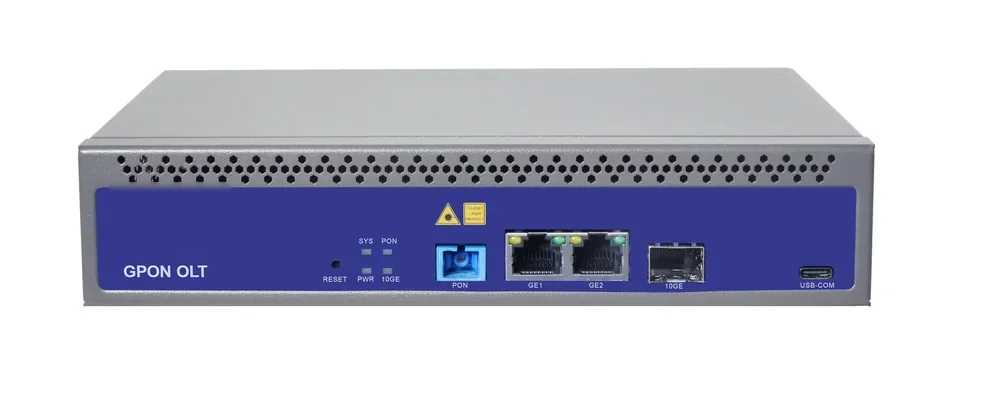
EPON · GPON · XGS-PON
PON access
OLT, ONU/ONT and PLC splitters sized as one optical budget.
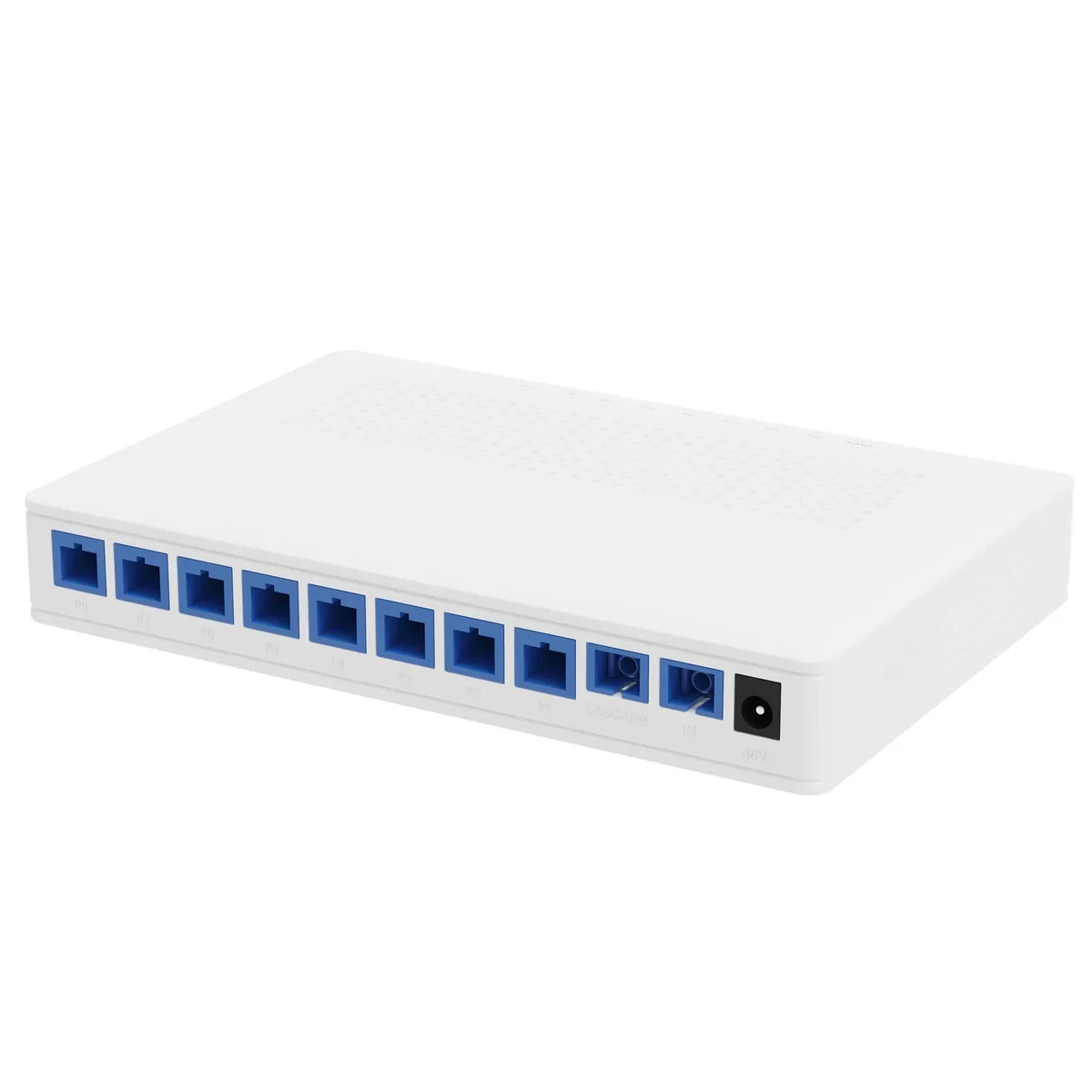
Hybrid cable · 200 m
Power over Fiber
Data and 48 V DC on one cable, up to 12 W per port.
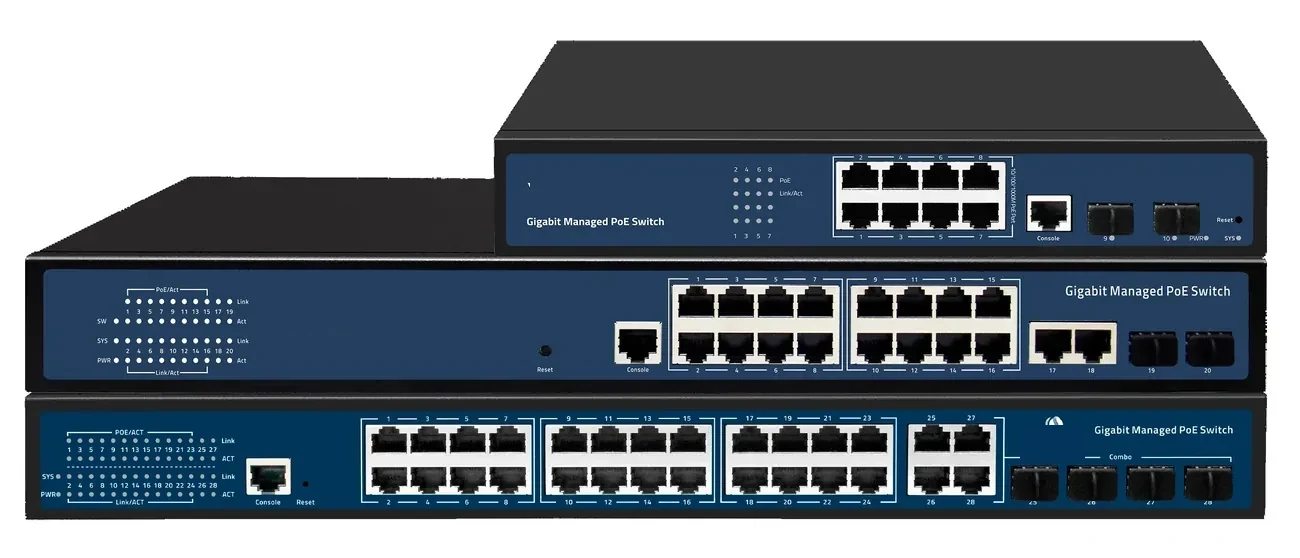
8 – 48 ports · 10G/100G
PoE & aggregation switching
Copper edge switching, PoE budgets and 10G/100G aggregation.
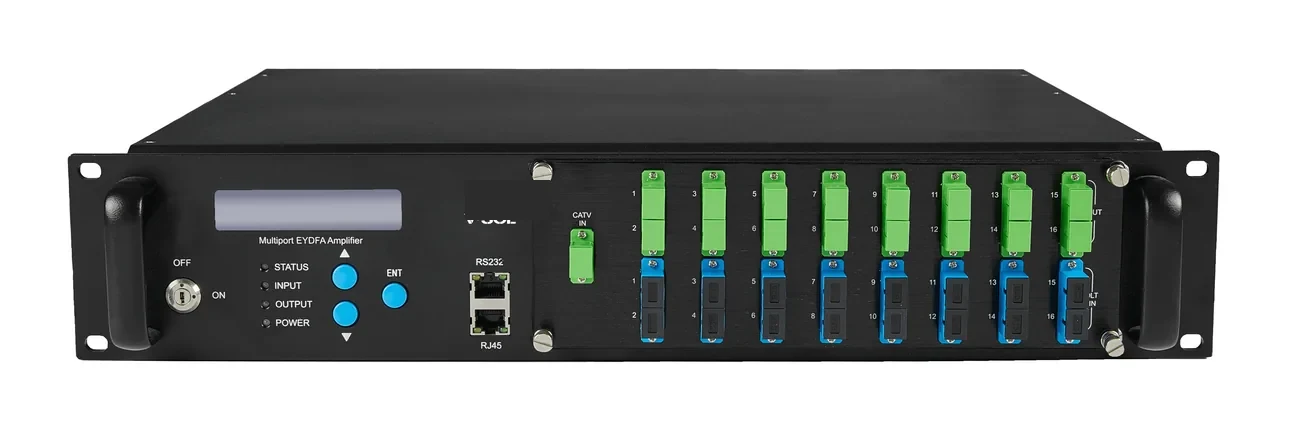
1550 nm · CATV
Optical transmission
Transmitters, EDFAs and CATV receivers for overlay and long haul.
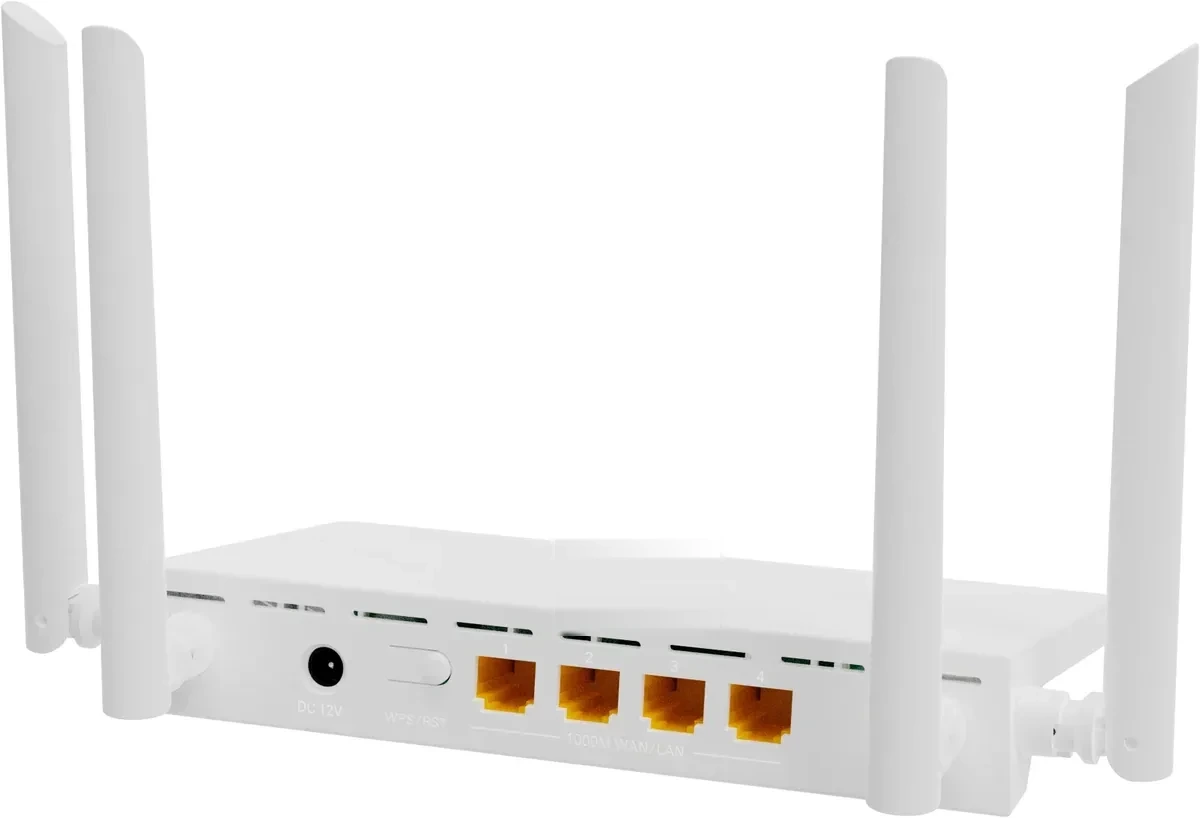
Wi-Fi 6/7 · 4G/5G
CPE & wireless
Routers, 4G/5G CPE and ceiling, wall-plate or high-density access points.
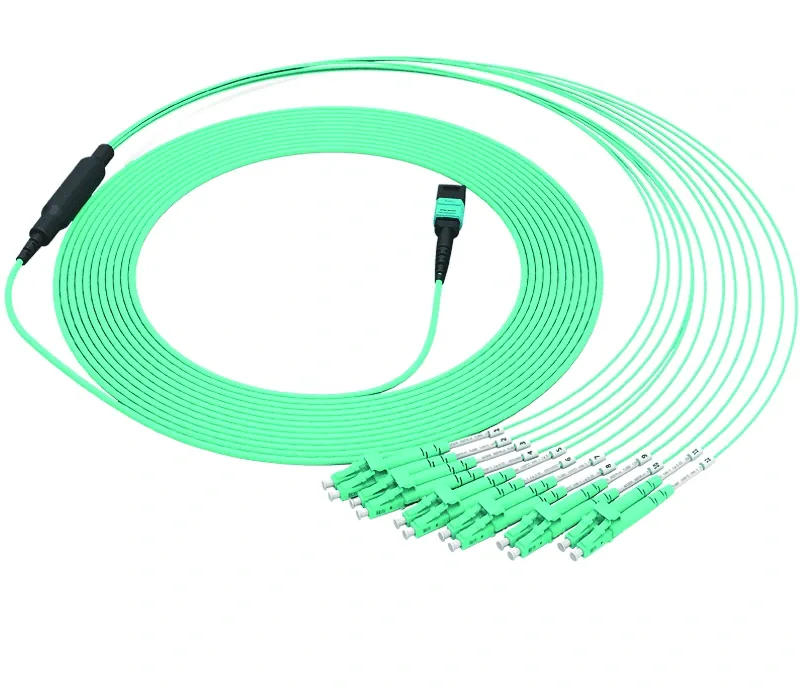
ODF · cords · SFP · SPD
ODN & accessories
ODF and enclosures, patch cords, SFP optics, surge protection and copper cabling.
Model library
Datasheet-backed model codes.
Four models with complete datasheets; other configurations are confirmed on the quotation.
02 / Power path
Three paths. One decision.
The endpoint does not care which technology you use; it cares whether it has power and a link. Distance, load and the presence of mains decide the path.
PoE inside 100 m · PoF for 100–200 m without mains · fibre plus a local switch for clusters. The same ODN can carry all three.
03 / Applications
Power and data, specified for the place.
Twelve application designs; the eight most common are shown here. Each starts from the same four facts: device, distance, load and mains. The product mix changes; the method does not.
 01
Application · security
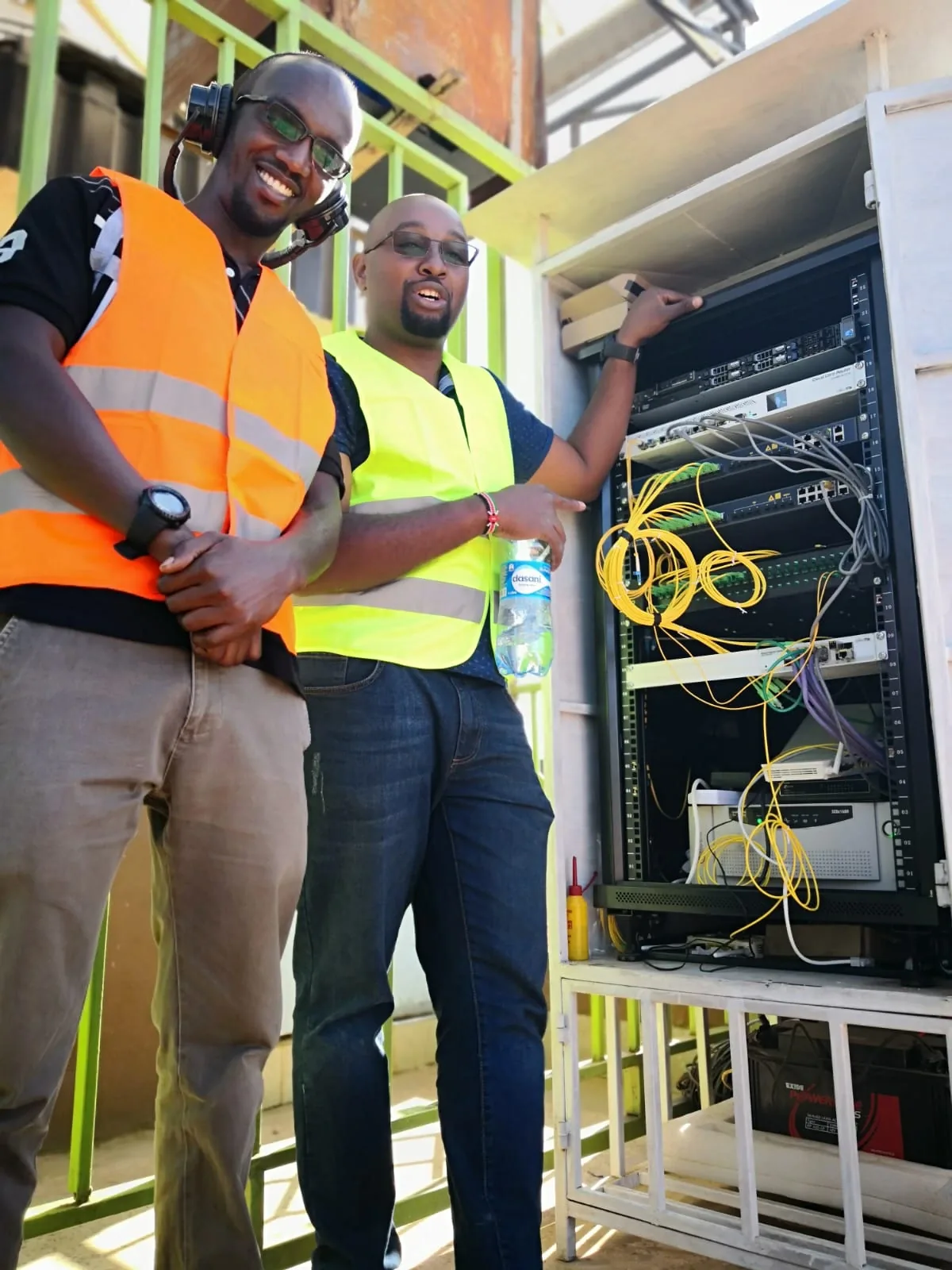
CCTV & Surveillance Power
Cameras beyond the 100 m copper limit, without a local socket.
View the design 02
Application · wireless
Outdoor Wireless Coverage
Ceiling and pole APs without a local mains drop.
View the design 03
Application · parking
Parking Lot Camera System
Pole cameras and lot APs without trenching power.
View the design 04
Application · perimeter
Perimeter Security Power
Long fences, few sockets, one fibre route.
View the design 05
Application · access control
Bollard & Access Control Power
Power at the column, without a mains trench.
View the design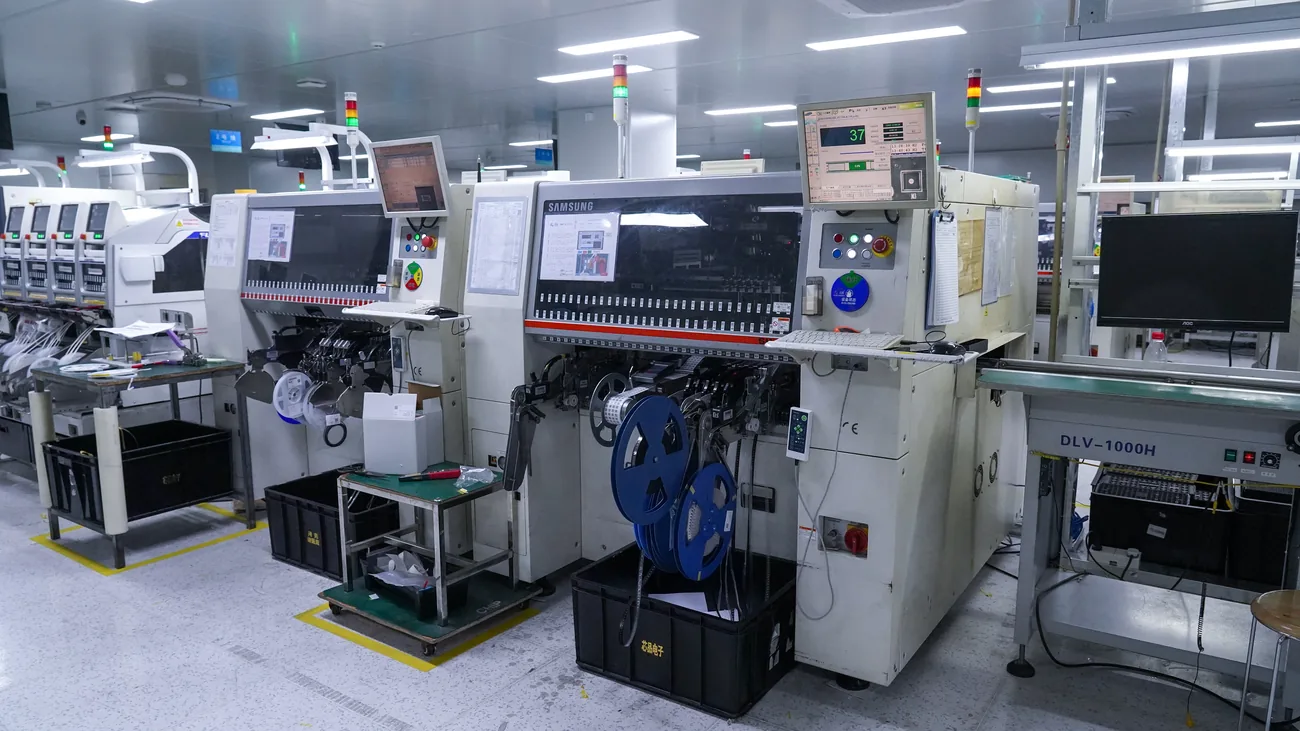 06
Application · campus
Campus Fibre Network
One ODN for buildings, cameras, APs and rooms.
View the design 07
Application · FTTH
FTTH Access Network
From the OLT port to the subscriber ONT.
View the design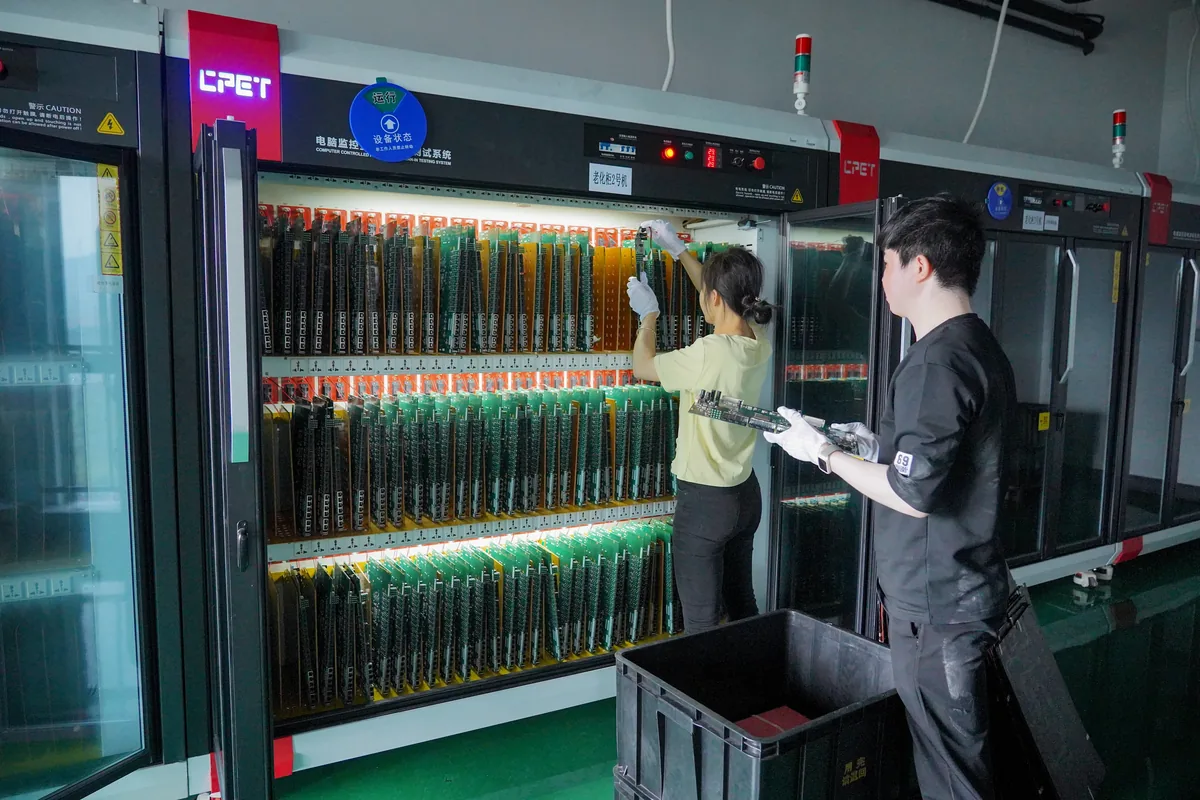 08
Application · industrial
Industrial & Tunnel Network
Ring topology, hardened switches, no weak copper.
View the design04 / Scenario library
More places to deploy the same optical chain.
The eight core application designs cover the most common sites. These additional scenarios use the same method: one optical budget, one power path and one bill of materials.
Hotel & hospitality
One fibre to the room; corridor APs via PoF or PoE.
View detailsClassroom & campus
One fibre per classroom, Wi-Fi 6 and PoE/PoF at the edge.
View detailsAC + AP wireless
Zero-touch APs, batch upgrades and seamless roaming.
View detailsBar, kindergarten & villa
A compact all-optical kit for 4–32 rooms or zones.
View detailsPoF typical configurations
8 APs, 16 APs, or 8 APs plus a PoE MDU.
View detailsDeployment & commissioning
ODF, fibre into the room, ONU placement, grounding and handover.
View detailsTechnical library
The calculations behind the design.
PoE engineeringPoE Distance Limit: How Far Can PoE Really Run?
The 100 m PoE limit is a standard, not a suggestion. Here is what counts inside the channel, why Cat5e/Cat6/Cat6a do not extend it, and the three ways to reach 200–500 m.
 Surge & grounding
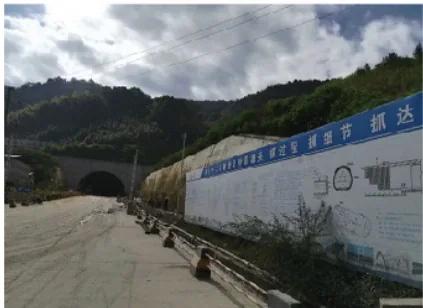
PoE Surge Protection: Why Copper Outdoor Runs Fail
A copper Ethernet run to a pole is a lightning path. Learn where surges enter, what a Type 2 SPD does, and how fibre and PoF change the protection plan.
 Power over Fiber
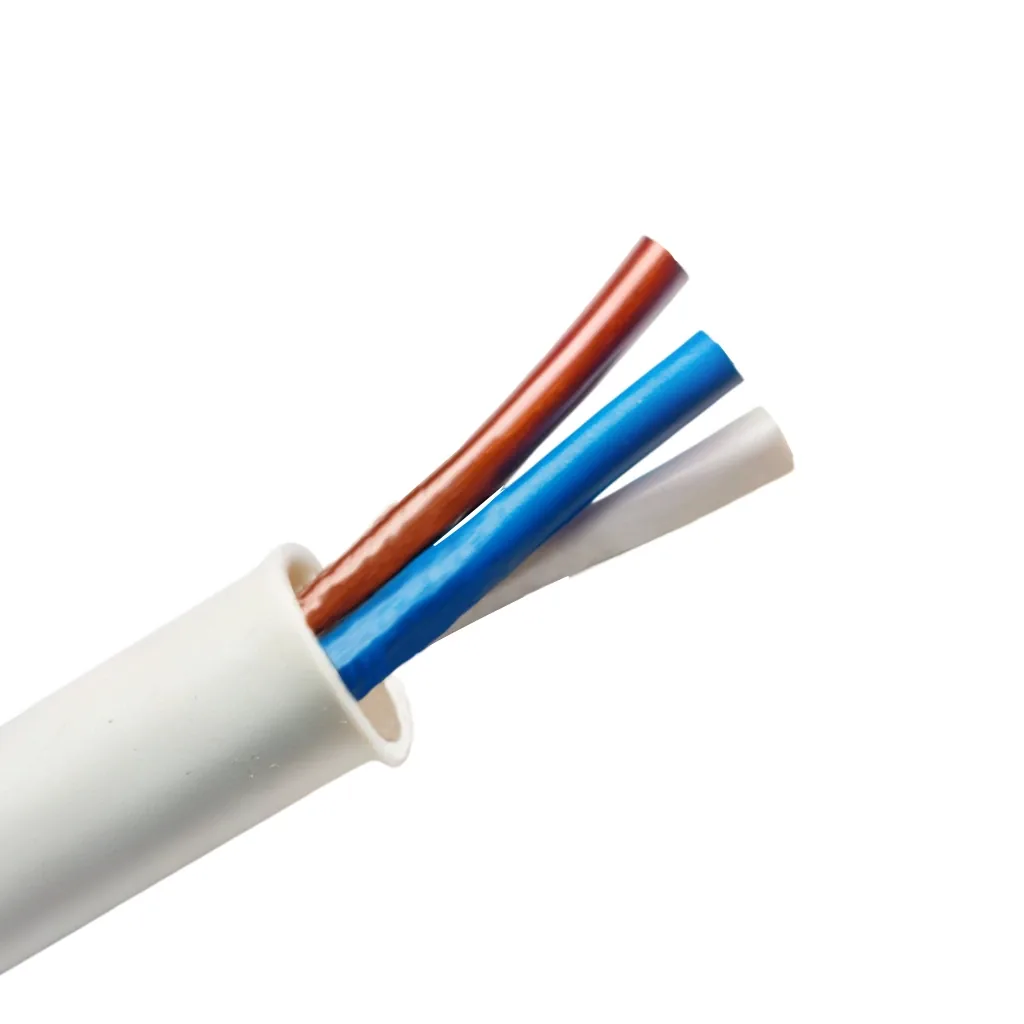
 vs PoE: Which Power Path Fits?
PoF and PoE are not competitors; they solve different last-metre problems. Compare reach, power, cable, standards and failure modes before choosing.
Market guides
Same equipment, different site conditions.
Six market notes for Southeast Asia, Africa, the Middle East and South Asia.
All markets05 / The design layer
One optical budget. One bill of materials.
Every quote starts from the endpoint, the distance, the mains condition and the load. We return the split ratio, the PoE/PoF power budget and the BOM — with the assumptions written down.
Optical budget
Worst-case loss, not average.
Power budget
PoE and PoF loads, per port and total.
One BOM
The chain and the spares in one document.
Documents
Datasheet, test data, packing list, HS code.
06 / Why Guanheng
Six things a catalogue cannot do.
A supplier should make the design checkable, not just ship a box. These are the six things we do before and after the order.
Specification first
We start from the endpoint, the distance and the mains condition, not from a model number.
One bill of materials
OLT, splitter, ONU, PoE/PoF and cable are quoted as one chain, so the interfaces match.
Model-level documents
Datasheet, test data and certificates are supplied for the quoted model — not a blanket claim.
Partner production
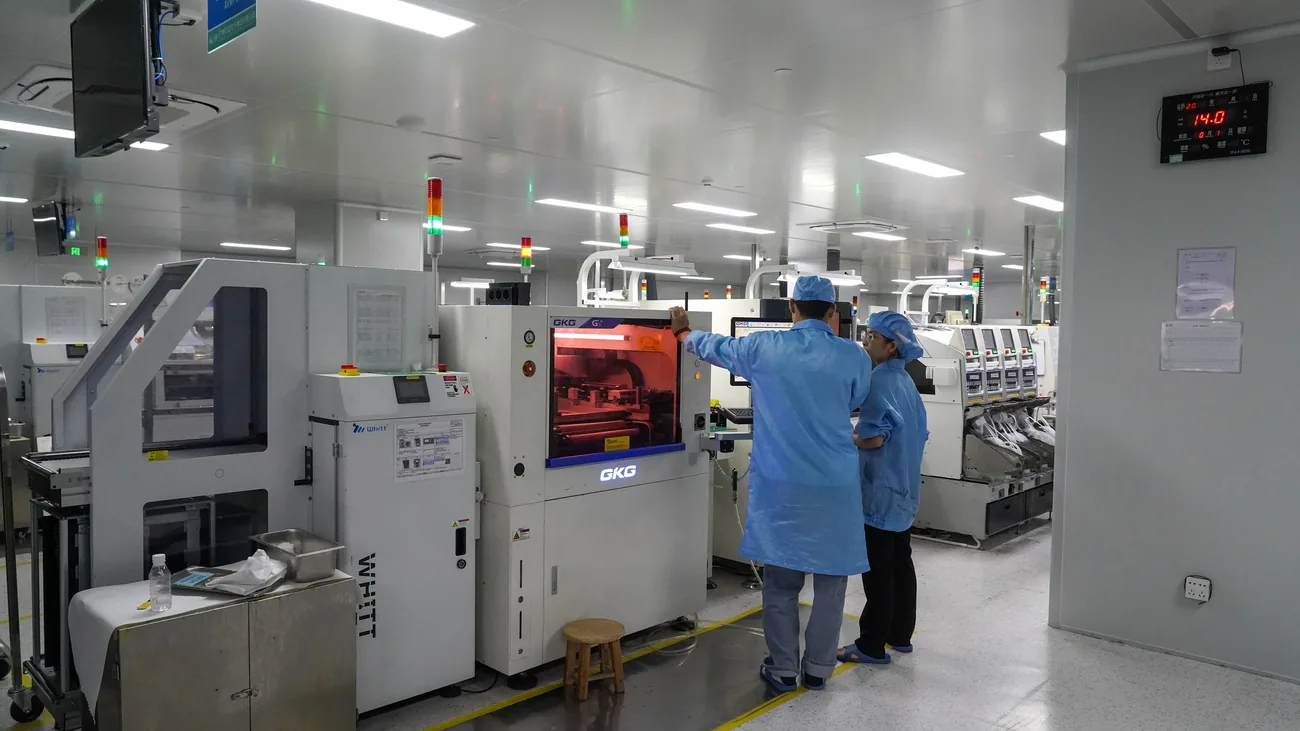
Equipment is built by qualified manufacturing partners under an ISO 9001 quality system.
Export packing
Packing list, HS code and Incoterm are agreed before the shipment leaves.
Tested before shipment
Optical power and model-level test data travel with the order.
Documented, not guessed
Every quote states the split ratio, the optical budget, the PoE/PoF load and the assumptions it uses.
07 / Project support
A pilot first, then the rollout.
We do not quote a catalogue page. We quote the chain and show the arithmetic, then prove one site before the full order.
Send the site data
Endpoint count, longest run, mains condition and load per device. Six answers are enough to start.
We calculate the budget
Splitter loss, fibre loss, connectors, splices and a 3 dB ageing margin. The calculation is returned with the BOM.
Choose the path per zone
PoE inside 100 m, PoF for 100–200 m without mains, fibre plus a local switch for clusters.
Sample and FAT
A sample unit or a pilot batch is configured and tested on the actual OLT/switch before the full order.
Document and ship
Model datasheets, test data, as-built port labels and export packing are issued with the order.
We publish references only with the customer’s permission. No invented case studies.
08 / FAQ
The questions that decide the power path.
If your question is not here, send the site details and we will answer with the calculation, not a brochure.
Ask an engineerWhat is Power over Fiber, in one sentence?
It is a hybrid cable system that carries data on an optical fibre and 48 V DC on a copper pair in the same jacket, delivering up to 12 W per port to 200 m without a mains socket at the endpoint.
Can PoF replace PoE everywhere?
No. PoF is for endpoints 100–200 m from power with a load under 12 W. Inside 100 m, standard PoE is cheaper and simpler; above 12 W or 200 m, use a local PoE switch or a mains feed.
Do you supply both GPON and EPON?
Yes. The OLT, ONU, splitter and ODF can be quoted as one chain for GPON, EPON or XGS-PON. The PON mode, optical class and connector polish are confirmed before the order.
How do you size the optical budget?
Start with the OLT transmit power and the ONU sensitivity, subtract the splitter, fibre, connectors and splices, and keep a 3 dB ageing margin. The calculation is returned with the bill of materials.
What information do you need for a quote?
Endpoint count, longest run, whether mains is available at the endpoints, power per device, country and the services involved (CCTV, Wi-Fi, access control, FTTH, CATV). Six answers are enough.
Are you a manufacturer?
We are a supplier and specification partner. Equipment comes from qualified manufacturing partners; we specify the chain, confirm the model datasheet and supply the model-level test documents with the order.
Next step
Tell us the distance, the load and the mains condition.
We return a link and power plan with the optical budget, the PoE/PoF load and a bill of materials — usually within one business day.
No obligation. The plan states its assumptions so your engineer can check it.