What is the difference between hybrid cable and fibre cable?
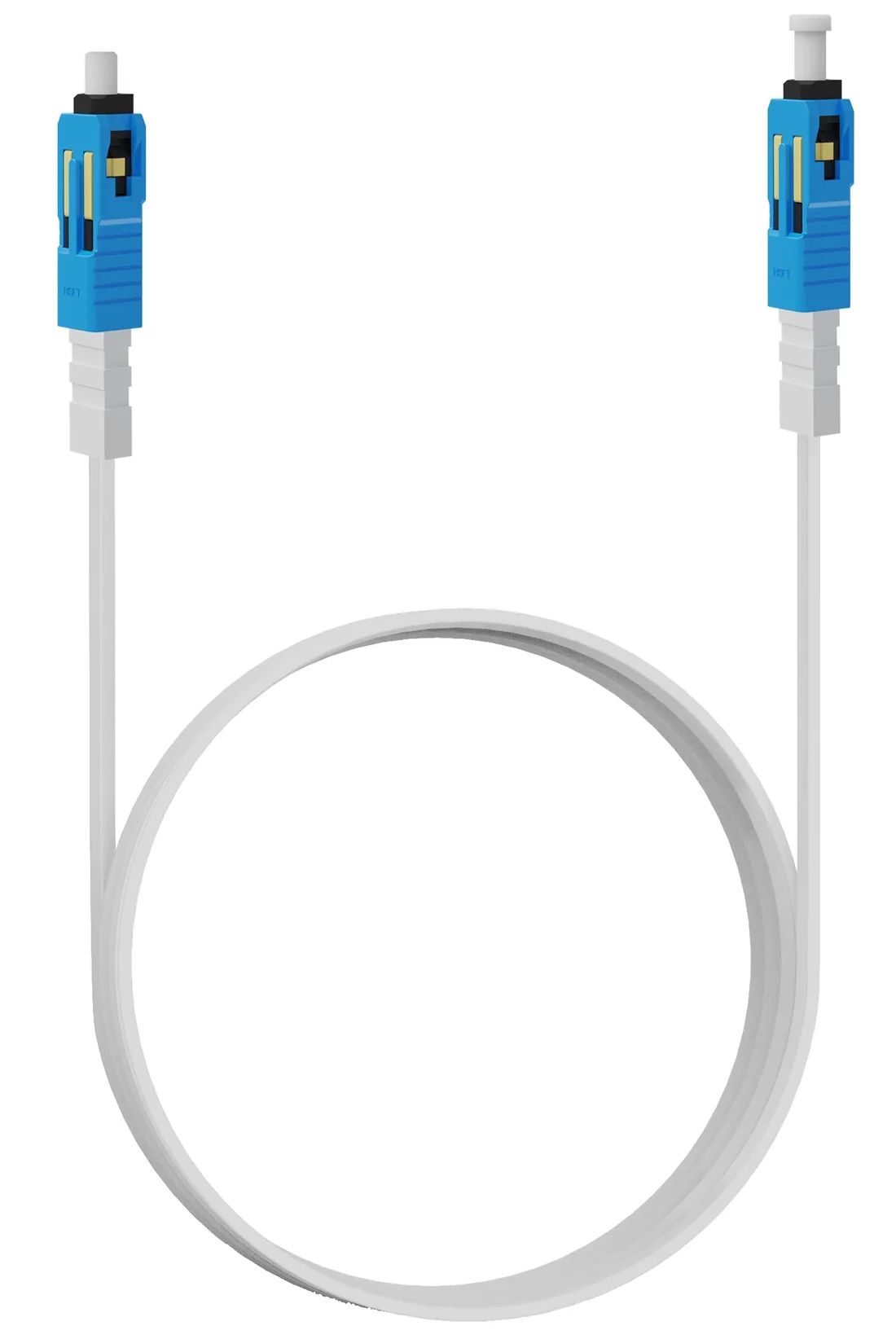
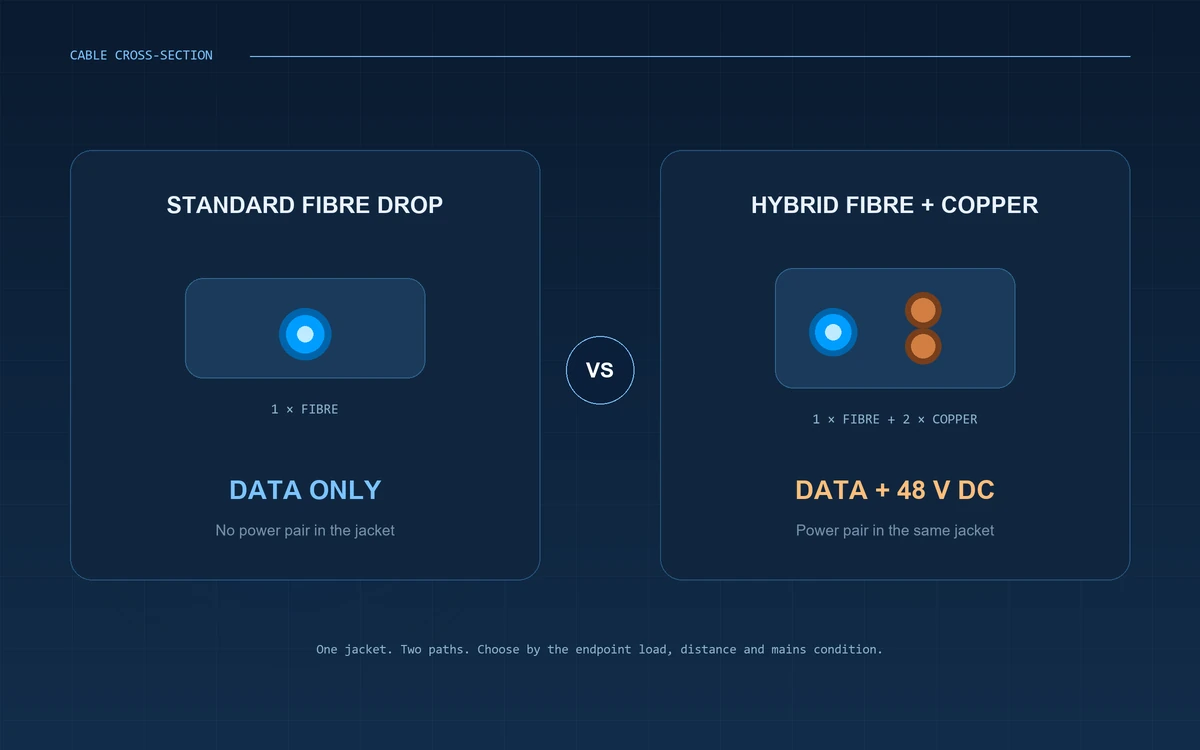
A standard fibre drop carries optical fibre only. A hybrid cable carries one or more fibres plus a copper pair in the same jacket. The fibre carries data; the copper carries DC power. The cable is used in Power-over-Fiber systems where the endpoint has no mains.
The hybrid cable is not a replacement for a standard fibre drop in every case. If the endpoint has a local socket, a standard fibre drop plus a DC adapter is cheaper and simpler. The hybrid cable earns its cost when it removes a mains spur.
| Attribute | Standard fibre drop | Hybrid PoF cable |
|---|---|---|
| Conductors | Fibre only | Fibre + copper pair |
| Data | Optical | Optical |
| Power | None | 48 V DC |
| Endpoint mains | Required | Not required |
| Connector | SC/LC | SC/UPC (hybrid) |
| Typical use | FTTH, ONT | PoF AP, pole camera, reader |
Where does a hybrid cable help?
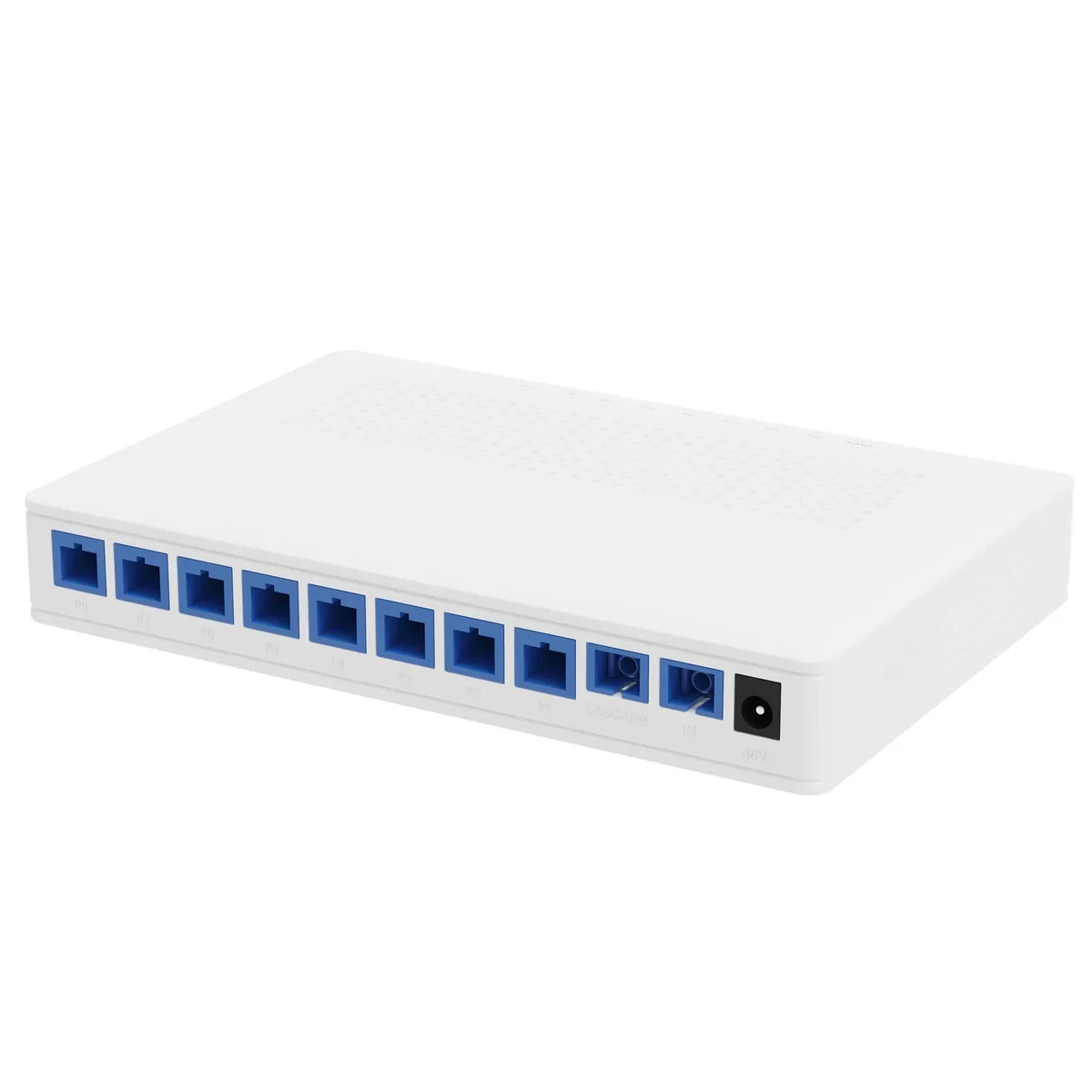
Ceiling APs, pole cameras, card readers, intercoms and sensors: devices that need both data and a small amount of power, at a location where a mains socket is absent. The hybrid cable replaces a fibre drop plus a mains spur, and removes the copper Ethernet run that would otherwise bring a surge path.
It also simplifies the installation sequence: one pull, one connector, one label. On a retrofit, that can be the difference between a one-day and a three-day job.
Where does it not help?
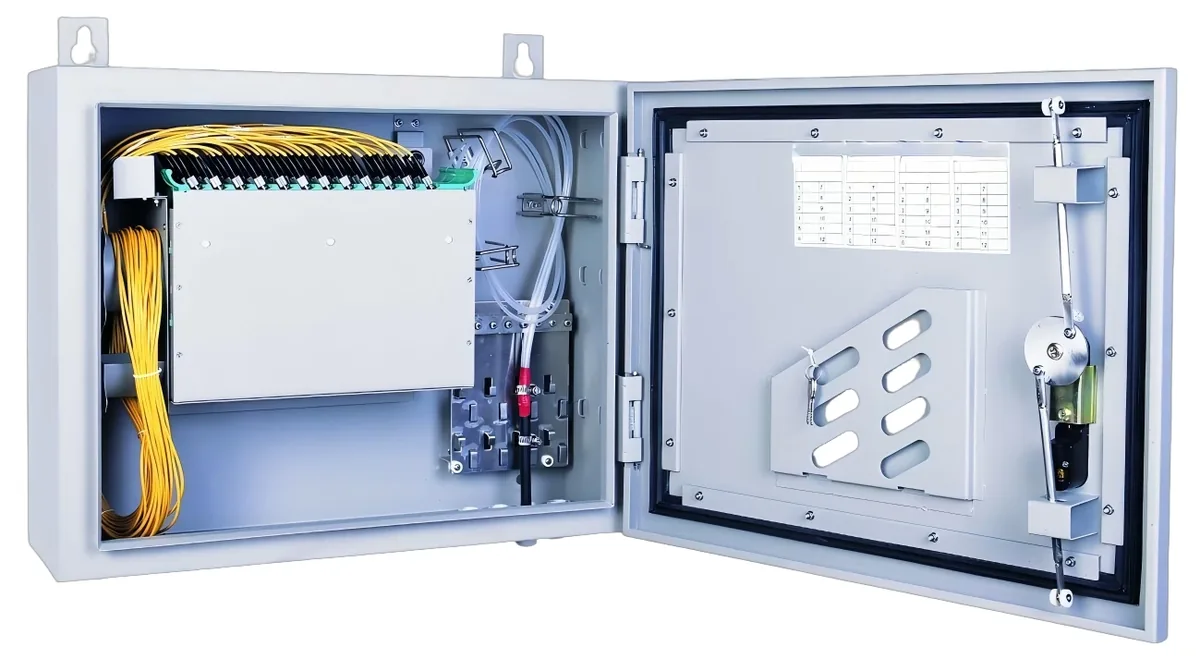
High-power loads (PTZ with heater, bollard motor, display), runs beyond 200 m, and sites that already have a powered cabinet within 100 m. In those cases, a standard fibre drop plus a local PoE switch or a mains feed is the better design.
The hybrid cable also adds a copper path that must be protected and bonded. It is less exposed than a copper Ethernet run, but it is not a dielectric cable. Do not treat it as one.
How do you specify the cable?
Specify the fibre type (G.657A2 for bends), the connector (SC/UPC or SC/APC), the length measured along the route, the jacket rating and the bend radius. For outdoor use, add UV-rated conduit, a drip loop and an IP-rated connector enclosure.
Do not order by room size. Measure the route including the vertical drop, the tray, the service loop at both ends and the entry into the enclosure. A 3 m cable for a 2 m drop is often too short once the service loop is counted.
- Fibre type: G.657A2 for tight bends.
- Connector: match the splitter/ONU polish.
- Length: route + 1 m service loop at each end.
- Jacket: −20 to +80 °C; UV conduit outdoors.
- Bend radius: keep above 20 mm.
- Label both ends with the device name.
| Parameter | Specify | Why it matters |
|---|---|---|
| Fibre type | G.657A2 | Tight bends behind ceiling tiles |
| Connector | SC/UPC or SC/APC | Match the splitter and ONU polish |
| Copper pair | 48 V DC; resistance from datasheet | Voltage drop at 200 m |
| Length | Route + 1 m service loop each end | Avoid a short cable on site |
| Jacket | −20 to +80 °C; UV conduit outdoors | Temperature and sunlight |
| Bend radius | ≥20 mm | Fibre and copper survival |
| Test | Insertion loss + continuity | Acceptance before closure |
Confirm the copper resistance and connector polish against the splitter and ONU datasheets.
Use this on a real site
Send the endpoint count, the longest run, the mains condition and the load. We will apply this calculation to your project and return the optical/power budget with the bill of materials.