Where does a lightning surge enter a PoE camera?
A surge can enter on the copper Ethernet cable, the camera’s power input, or the mounting structure. A nearby strike raises the local earth potential; the cable shield, the camera housing and the switch port sit at different potentials for a few microseconds, and the current finds a path through the weakest insulation. The result is often a dead switch port and a camera that appears to have “just failed.”
The longest copper run is the most exposed. A 90 m cable from a building to a pole is an antenna and a current path. Shortening the copper run, or replacing it with fibre, reduces the exposure more effectively than adding a single SPD at one end.
What does a PoE surge protective device actually do?
A Type 2 SPD clamps the transient voltage between the conductors and the local earth, diverting the surge current before it reaches the equipment. It must be installed with a short, low-inductance earth connection; a long green/yellow wire to a distant earth bar defeats the device. The SPD also has a finite life: after a large event it may be degraded or failed, so it needs status indication and replacement.
For an outdoor camera, the protection is a system: a Type 2 SPD at the building entry, a second device at the pole if the run is long, a bonded metal housing, a proper earth electrode at the pole, and a drip loop. Adding an SPD without bonding is not protection; it is a false sense of it.
- Type 2 SPD at the cabinet / building entry.
- Short, straight earth conductor to the local earth bar.
- Bond the camera housing and the pole to the same earth.
- Drip loop and UV-rated cable entry.
- Replace the SPD after a large surge or when its status indicator changes.
Does fibre remove the need for surge protection?
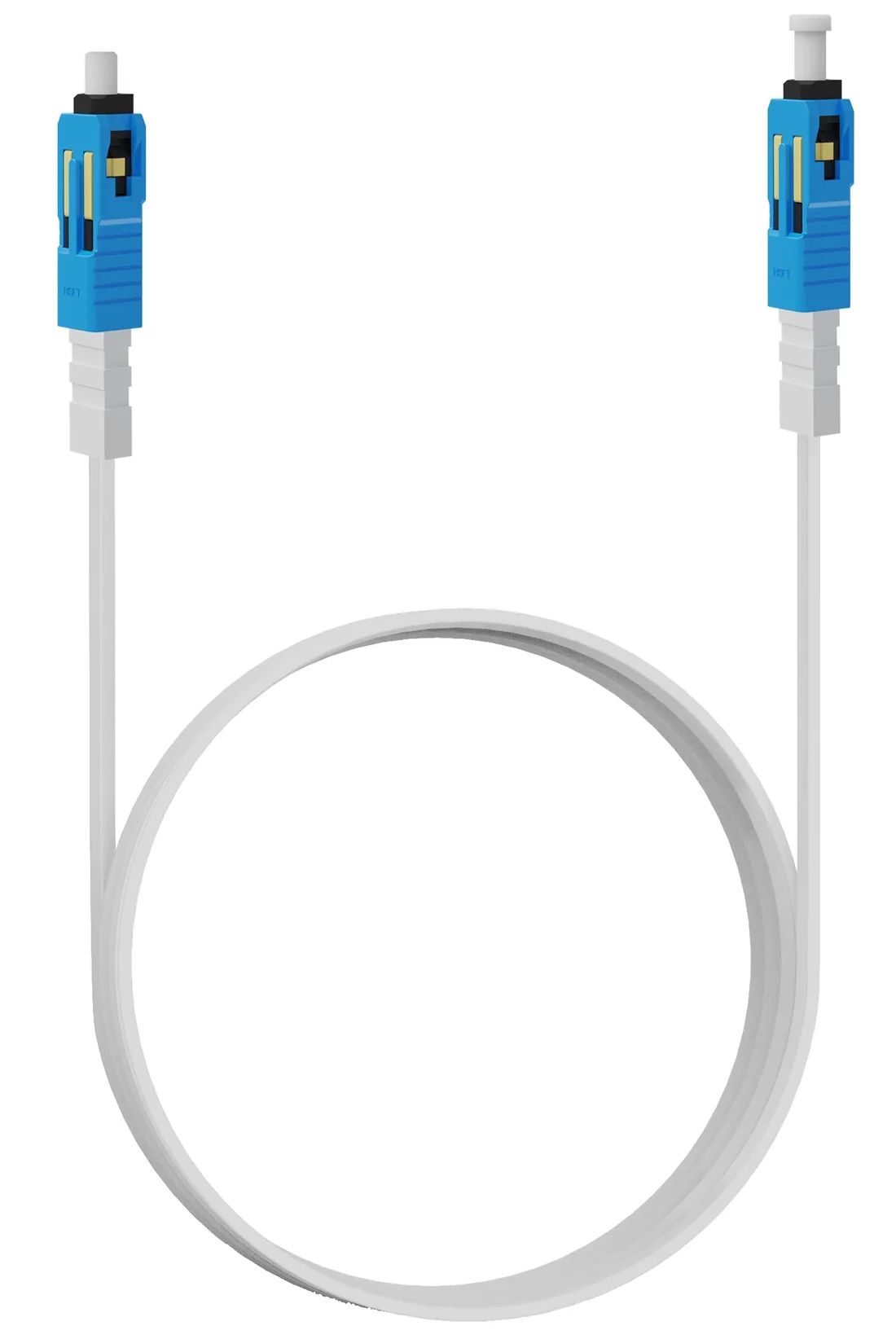
Fibre removes the metallic data path, so the camera no longer has a copper Ethernet cable acting as an antenna. That is a real improvement. But the camera still has a power input, a housing and a local earth, and a PoF or local supply still has conductors. The power pair needs protection at the entry, and the housing must be bonded.
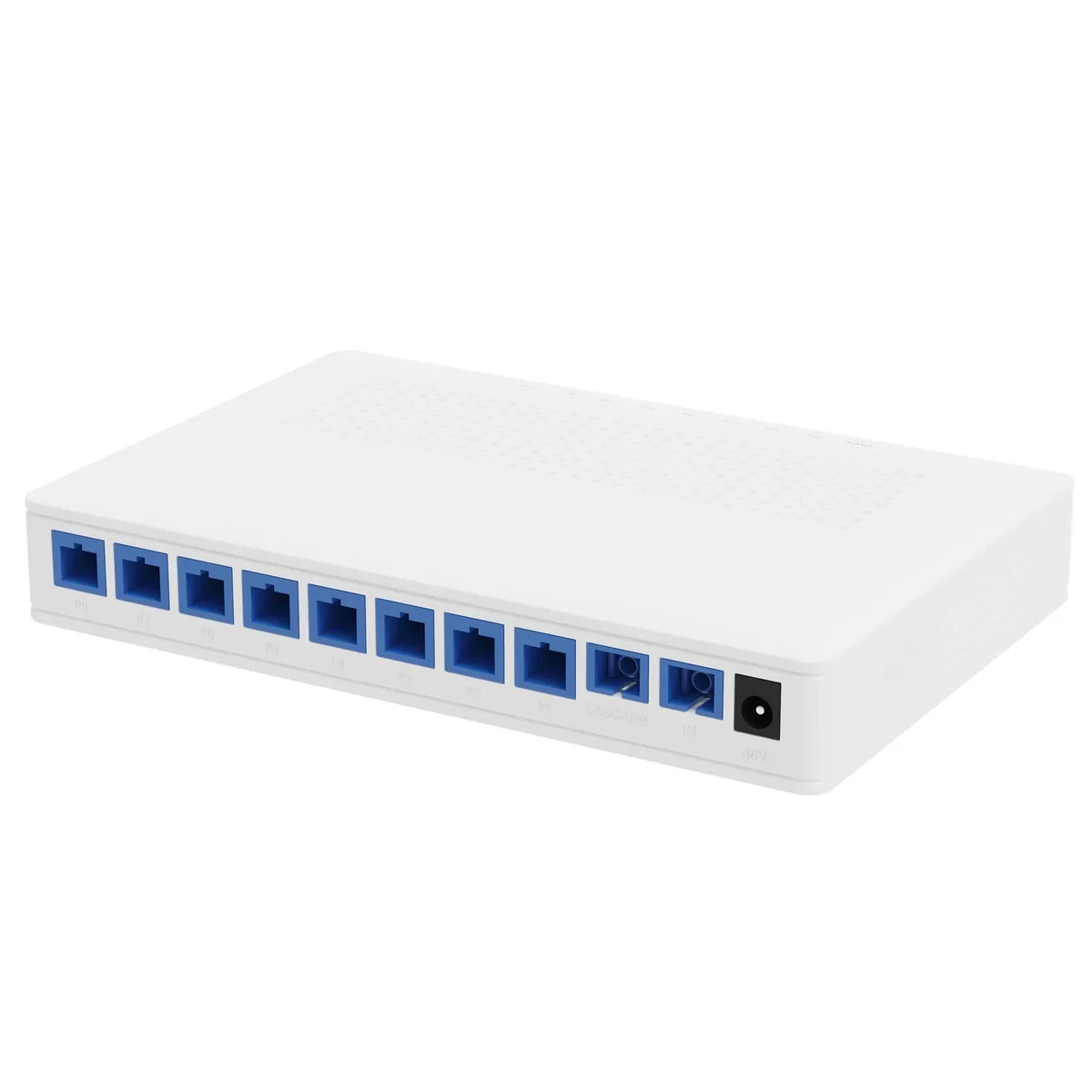
PoF is often described as “inherently surge-resistant.” The optical path is dielectric, which is true, but the 48 V pair in the hybrid cable is still copper. Protect the power pair at the building entry and keep the copper section short. Do not assume the word “fibre” removes every surge path.
| Link type | Metallic data path | Power path | Protection focus |
|---|---|---|---|
| Copper PoE | Yes | Same copper cable | SPD at entry and pole; bond housing |
| Fibre + local mains | No | Local AC feed | Local SPD and equipotential bonding |
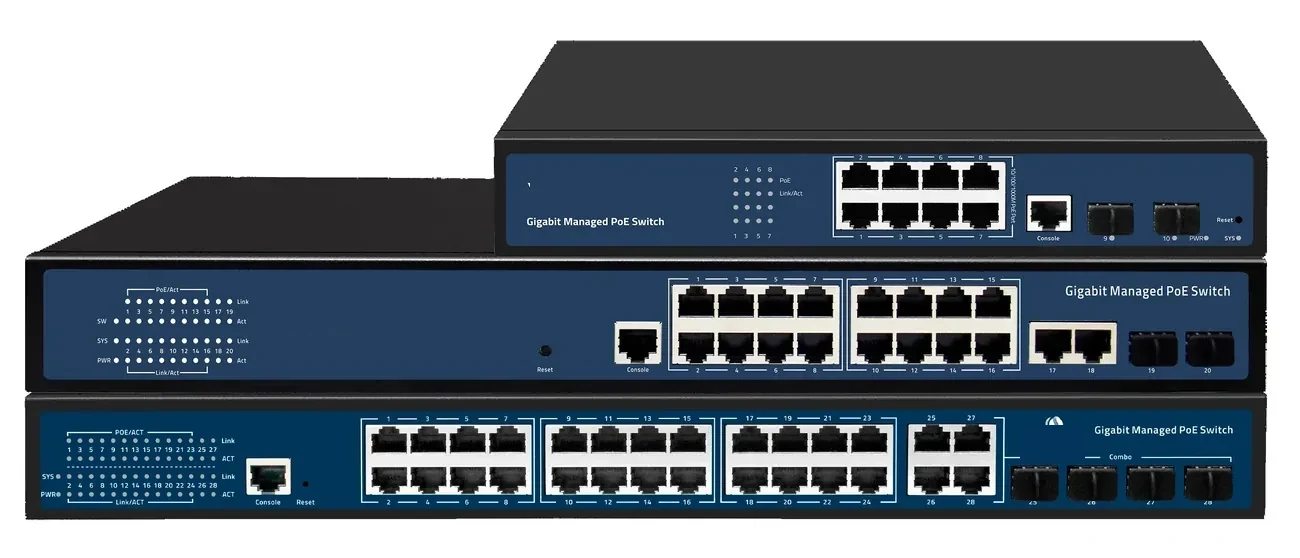
| Fibre + local PoE switch | No | Local copper | SPD at the local cabinet |
| PoF hybrid | No | 48 V copper pair | SPD on the power pair; bond housing |
Fibre removes the metallic data path, not every metallic path.
How should an outdoor PoE run be designed?
Start with the route: keep the copper run under 100 m, preferably under 80 m, and run fibre for anything longer or between buildings. Put the switch indoors or in a bonded cabinet. Use an SPD at the cabinet entry and at the pole if the site has a high lightning exposure. Bond the pole, the camera and the cabinet earth together.
Then check the load. A camera with a heater may draw 25 W; the PoE budget and the voltage drop both matter. If the site has no mains at the pole, a PoF drop removes the local power point but still needs the power-pair protection described above.
| Measure | Why |
|---|---|
| Copper run ≤ 80 m | Leaves margin for patch cords and reduces exposure |
| Fibre for building-to-building | Removes the metallic data path |
| Type 2 SPD at entry | Clamps the transient before the switch |
| Bonded housing and pole | Prevents a potential difference across the camera |
| Local earth electrode | Gives the surge a short path to earth |
| SPD status check | A failed SPD looks like a working one without indication |
Is surge protection cheaper than replacing cameras?
Usually, yes. A single strike can destroy the camera, the PoE port and the switch power supply. The cost is not only the hardware: it is the site visit, the downtime and the insurance discussion. A Type 2 SPD and a proper earth connection cost a fraction of that, especially on a site with multiple poles.
The calculation changes if the site has no earth infrastructure. In that case, the design should avoid long copper runs altogether: fibre to the cabinet, local PoE, and PoF only for the isolated low-power points. The best surge protection is often a shorter copper path.
Use this on a real site
Send the endpoint count, the longest run, the mains condition and the load. We will apply this calculation to your project and return the optical/power budget with the bill of materials.