PON engineering

GPON vs EPON vs XGS-PON:
Which PON Generation Fits?

Compare GPON, EPON, XG-PON and XGS-PON by line rate, split ratio, reach, ONU cost and coexistence. A selection table for FTTH, campus and CCTV.

Guanheng Engineering Desk October 24, 2026 8 min read
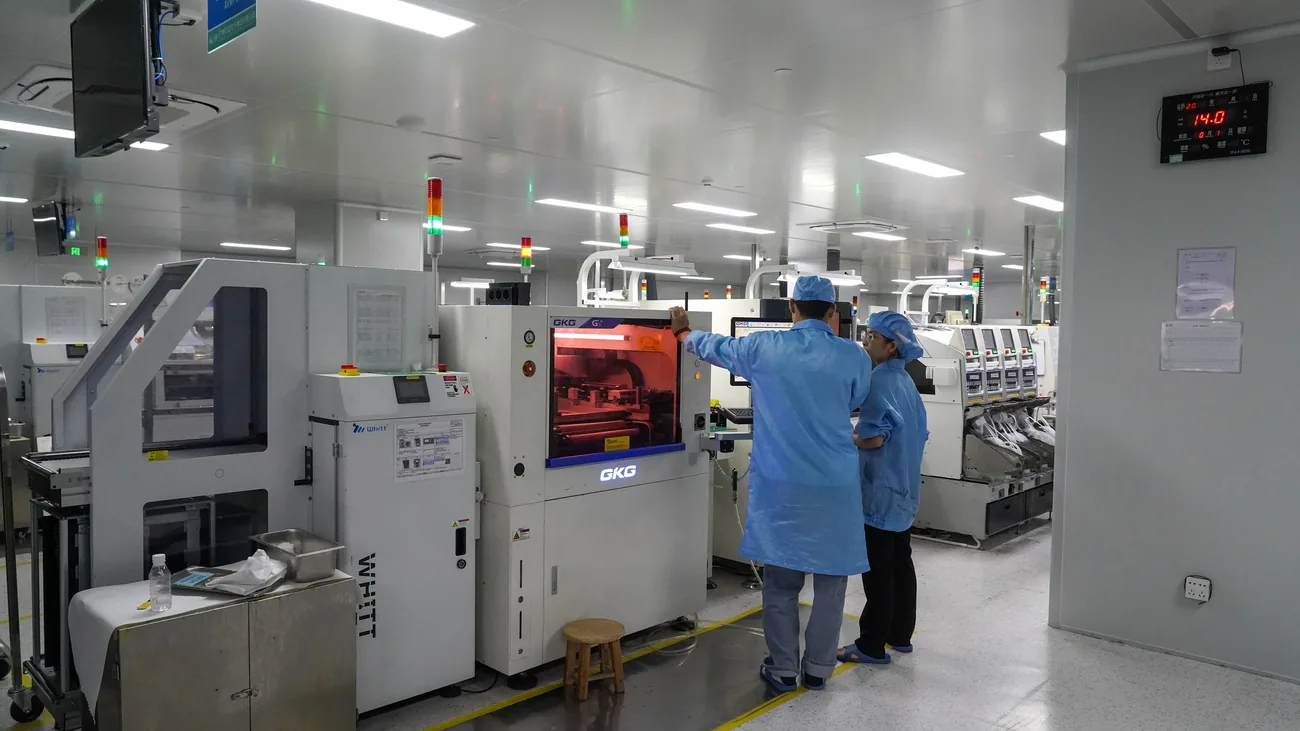
Cleanroom production area for optical equipment

What are the line rates of GPON, EPON and XGS-PON?

GPON (ITU-T G.984) runs 2.5 Gbps downstream and 1.25 Gbps upstream. EPON (IEEE 802.3ah) runs 1.25 Gbps in both directions. XG-PON (G.987) runs 10 Gbps downstream and 2.5 Gbps upstream. XGS-PON (G.9807) runs 10 Gbps symmetric. 10G EPON offers 10/1 Gbps or 10/10 Gbps depending on the variant.

The downstream rate is shared by every ONU on the PON port. A 1:64 GPON port with 2.5 Gbps gives an average of about 39 Mbps per subscriber at full contention, which is why ISPs plan contention ratios rather than selling the headline rate to every user.

TechnologyDownstreamUpstreamStandardTypical split
EPON1.25 Gbps1.25 GbpsIEEE 802.3ah1:32 / 1:64
GPON2.5 Gbps1.25 GbpsITU-T G.9841:32 / 1:64
XG-PON10 Gbps2.5 GbpsITU-T G.9871:64 / 1:128
XGS-PON10 Gbps10 GbpsITU-T G.98071:64 / 1:128
10G EPON10 Gbps1 or 10 GbpsIEEE 802.3av1:32 / 1:64

How does the split ratio change the choice?

Every extra split costs optical budget. At 1:32 the splitter takes about 16.5 dB; at 1:64 it takes 20.5 dB. Higher-rate PONs often use 1:128 in dense areas, but that takes about 23.5 dB, leaving little margin for a long span. The split ratio is a budget decision, not a headline specification.

For a short in-building ODN, 1:64 is normal. For a 20 km rural span, 1:32 is safer. For XGS-PON with 10 Gbps per port, a 1:128 split still gives about 78 Mbps per subscriber at full contention, but the optical budget becomes the constraint.

Is EPON cheaper than GPON?

Often yes, because EPON ONUs and optics can be lower cost and the protocol is simpler. GPON has a larger ecosystem and is the usual choice where an ISP handover or an existing GPON headend dictates the standard. The difference is smaller than the cost of a wrong split ratio or a rework.

For a private CCTV or campus network, EPON’s symmetric 1.25 Gbps is often enough and the lower cost is attractive. For a residential FTTH network with a carrier handover, GPON is usually the safer choice. For 10G business services, XGS-PON.

Can GPON and XGS-PON share the same fibre?

Yes, with WDM coexistence. XGS-PON uses 1577 nm downstream and 1270 nm upstream; GPON uses 1490/1310 nm. A coexistence element (WDM) at the headend combines them, and an XGS-PON ONU filters the wavelengths it needs. The ODN splitters must work across the full band.

Coexistence lets an operator add 10G services without replacing the GPON ODN. It requires careful optical budget planning because the coexistence element adds loss, and the splitter must be rated for all wavelengths in use.

Which generation should a new project use?

For a new residential FTTH network, GPON is the default; XGS-PON if the business case includes multi-gigabit packages or a 10-year upgrade path. For a private CCTV or campus network, EPON or GPON is usually enough; the ONU cost and the existing headend matter more than the headline rate. For a hotel or MDU with IPTV, GPON with a CATV overlay is common.

Do not choose a generation only by the marketing number. Check the ONU availability, the management system, the optical budget at the planned split, and the cost of the whole chain: OLT port, splitter, ONU, installation and spares.

ProjectRecommendedReason
Residential FTTHGPON, XGS-PON for premiumEcosystem and carrier handover
CCTV / campusEPON or GPONSymmetric 1.25G or 2.5G is ample
Hotel / MDU + CATVGPON + 1550 nm overlayCATV on the same ODN
Business 10G servicesXGS-PONSymmetric 10G
Upgrade of a GPON ODNXGS-PON with coexistenceReuse the fibre and splitters

Use this on a real site

Send the endpoint count, the longest run, the mains condition and the load. We will apply this calculation to your project and return the optical/power budget with the bill of materials.
Article FAQ

What questions does this guide usually raise?

If your question is not here, send the site details and we will answer with the calculation, not a brochure.

Ask an engineer

Is XGS-PON backward compatible with GPON ONUs?

Not on the same wavelength without a coexistence element and a compatible OLT/ONU set. XGS-PON uses different wavelengths; a GPON ONU cannot see an XGS-PON signal. Coexistence is a headend design, not a firmware switch.

Can I mix EPON and GPON ONUs?

Not on the same PON port. They use different protocols. An XPON ONU can be configured for one or the other, but the OLT port must match.

What split ratio should I use for GPON?

1:32 for long spans or high connector counts; 1:64 for short, dense ODNs with at least 3 dB margin. The splitter loss is 16.5 dB at 1:32 and 20.5 dB at 1:64.

Does XGS-PON need a different fibre?

No, standard single-mode fibre (G.652D or G.657A2) works. The splitters and connectors must be rated for the 1270–1577 nm band.

Which is better for CCTV, EPON or GPON?

Either. EPON is symmetric 1.25G and often cheaper; GPON gives 2.5G downstream for recorded video and is widely available. Choose based on ONU stock and the existing headend.

Can I upgrade an EPON network to GPON?

You would replace the OLT and the ONUs; the fibre and splitters can often be reused if they are rated for the wavelengths. Plan the upgrade as a parallel overlay if the services must stay live.

Equipment in this design

The parts this guide refers to.

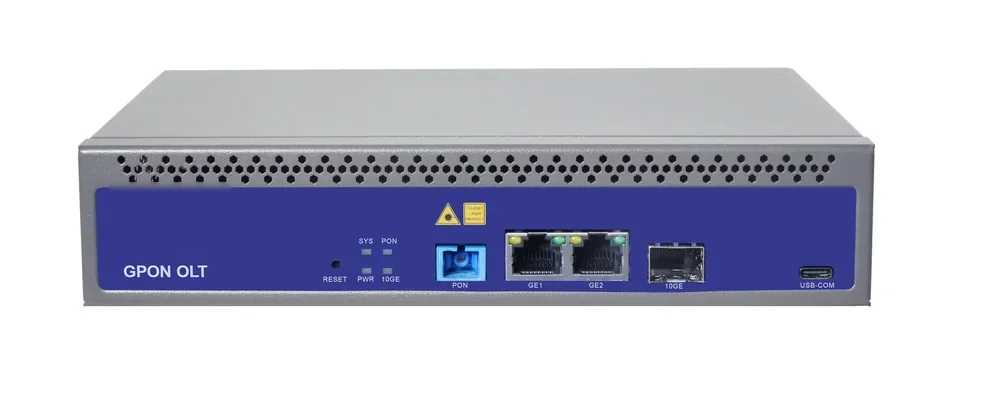
01GPON OLT with multiple PON ports and SFP uplinks

PON access · OLT

GPON OLT

From a 1-PON gateway to a 112-PON headend.

GPON OLT platforms for FTTH, campus and hotel access: 2.5 Gbps downstream and 1.25 Gbps upstream, 1:64 split per PON port and 20 km reach on Class B+ optics. Configurations run from a compact 1-PON gateway with built-in AC to a chassis with up to 112 PON ports.

Line rate
2.5 Gbps ↓ / 1.25 Gbps ↑
Max split
1:64 per PON port
Reach
20 km, Class B+
PON ports
1 – 112

Best for FTTH Access Network · Campus Fibre Network · Outdoor Wireless Coverage

View specifications
021U EPON OLT with eight PON ports and SFP uplinks

PON access · OLT

8-Port EPON OLT

1U, eight EPON ports, up to 512 ONUs.

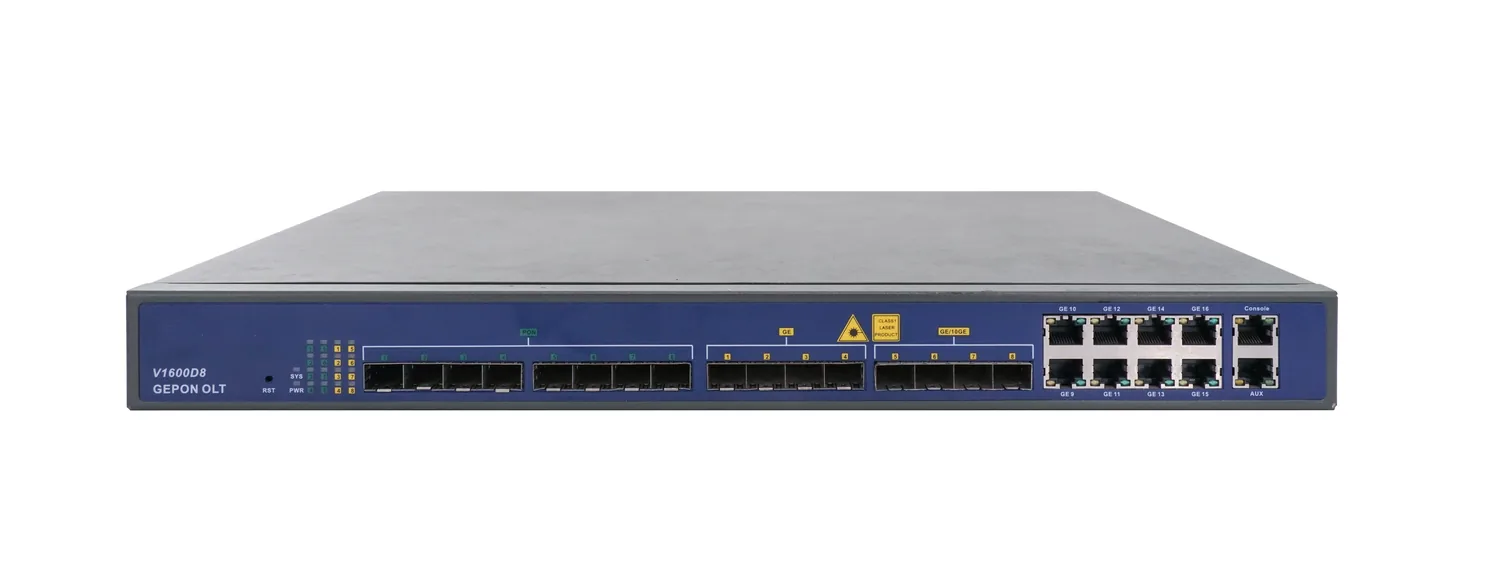
A 1U EPON OLT with eight PON ports, 16 uplink ports and a 128 Gbps backplane. It supports 1:64 splitting, 20 km reach and up to 512 ONUs, making it a compact headend for CCTV, campus and small FTTH networks.

PON ports
8 × EPON
Line rate
1.25 Gbps symmetric
Max ONUs
512 (64 per port)
Backplane
128 Gbps

Best for CCTV & Surveillance Power · Campus Fibre Network · FTTH Access Network

View specifications
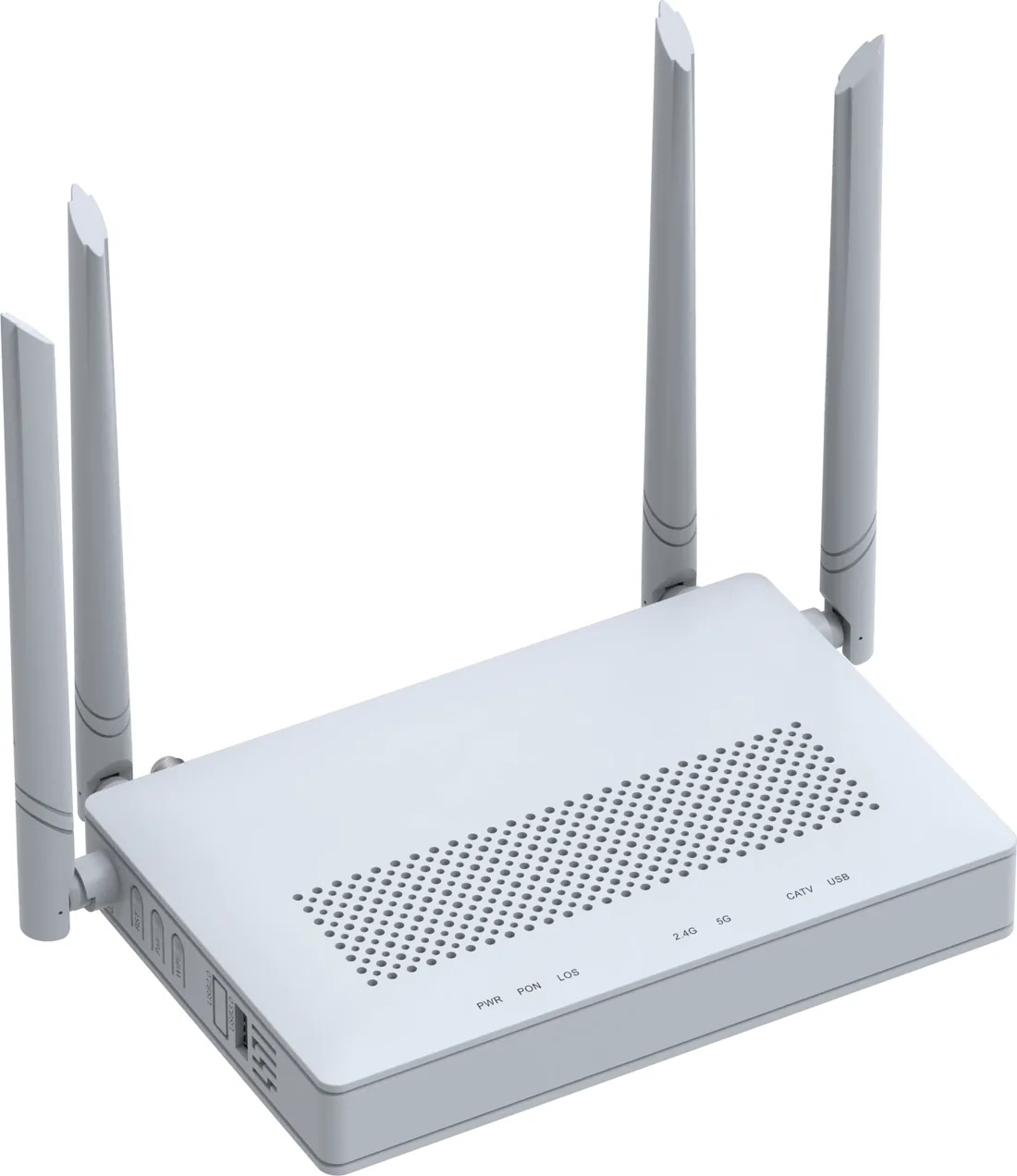
03XPON ONT with four GE ports, Wi-Fi 6 antennas and USB

PON access · ONU / ONT

GPON / XPON ONU & ONT

From a 1-GE bridge to a 4-GE Wi-Fi 6 gateway.

XPON ONU and ONT options for FTTH, hotel rooms, offices and outdoor cabinets: 1, 2 or 4 GE ports, Wi-Fi 4/5/6, CATV and POTS options, and 10G PON models. All units are SC single-mode, 20 km, EPON/GPON dual-mode where the model supports it.

PON
XPON, EPON/GPON
User ports
1 – 4 × GE
Wi-Fi
Wi-Fi 4 / 5 / 6
Reach
20 km

Best for FTTH Access Network · Campus Fibre Network · Outdoor Wireless Coverage

View specifications
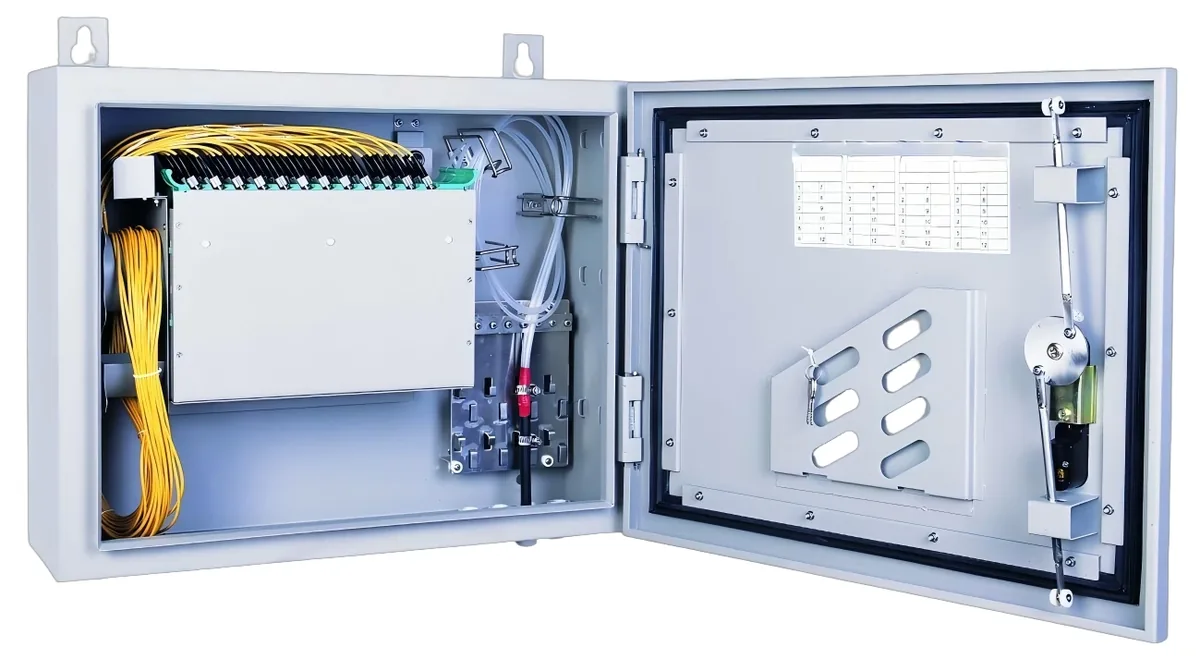
04Fiber distribution box with PLC splitters and SC adapters

PON access · ODN

Fiber Optic Splitter (PLC)

1×2 to 1×64, SC/UPC or SC/APC.

Planar lightwave circuit splitters from 1×2 to 1×64 for PON ODN construction. Typical insertion loss runs from 3.6 dB at 1×2 to 20.5 dB at 1×64; each batch ships with test data and the connector polish you specify.

Ratios
1×2 – 1×64
Wavelength
1260 – 1650 nm
Insertion loss
3.6 – 20.5 dB
Connector
SC/UPC / SC/APC

Best for FTTH Access Network · Campus Fibre Network · CCTV & Surveillance Power

View specifications

Next step

Turn this guide into a bill of materials.

We apply the same calculation to your site and return the split ratio, the PoE/PoF load and the assumptions used.

No obligation. The plan states its assumptions so your engineer can check it.