
What does each PON standard actually deliver?
The headline number is the line rate, not the subscriber speed. GPON runs 2.5 Gbps downstream and 1.25 Gbps upstream; EPON runs 1.25 Gbps in both directions; XGS-PON runs 10 Gbps symmetric; XG-PON runs 10 Gbps downstream and 2.5 Gbps upstream; 10G EPON runs 10 Gbps downstream with 10 Gbps or 1 Gbps upstream depending on the variant. All of them share the same passive ODN discipline: splitters, connectors and splices decide the optical budget.
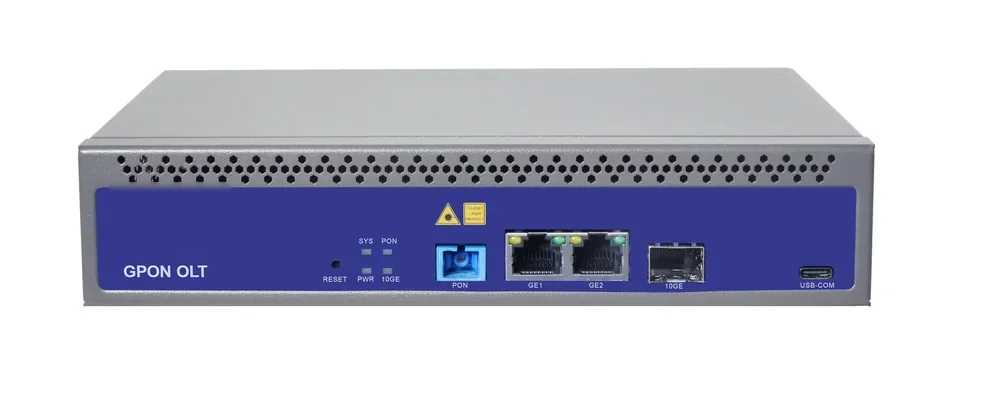
For a hotel, a campus or an FTTH estate, GPON is still the default because the ONU range is mature and the 2.5/1.25 Gbps line rate is enough for rooms and apartments. XGS-PON is the choice when the service catalogue includes multi-gigabit business access or when the ODN should serve 10G for the next decade. EPON is often used for CCTV and private networks where symmetric 1.25 Gbps is enough and the ONU stock is EPON. The GPON OLT, EPON OLT and XGS-PON OLT pages show the port and uplink options.
| Standard | Downstream | Upstream | Typical split | Best fit |
|---|---|---|---|---|
| GPON | 2.5 Gbps | 1.25 Gbps | 1:32 / 1:64 | FTTH, hotel, campus access |
| EPON | 1.25 Gbps | 1.25 Gbps | 1:32 / 1:64 | CCTV, private campus, cost-led access |
| XGS-PON | 10 Gbps | 10 Gbps | 1:32 / 1:64 | Business 10G, premium FTTH |
| XG-PON | 10 Gbps | 2.5 Gbps | 1:32 / 1:64 | Downstream-heavy residential |
| 10G EPON | 10 Gbps | 10 Gbps or 1 Gbps | 1:32 / 1:64 | 10G EPON networks |
Ratings are line rates, not guaranteed subscriber throughput. The optical budget and the OLT port count decide the service.
Where does the bandwidth difference show up on site?
A GPON port at 2.5 Gbps shared by 32 subscribers gives an average of about 78 Mbps if everyone downloads at once, which is why the split ratio and the service profile matter more than the headline rate. In practice the traffic is bursty, and GPON serves hotels and apartments well. The limit appears when the site adds 4K video, central CCTV recording, Wi-Fi 6 access points or business VPN traffic on the same port.
A 10G PON port gives more headroom, but the subscriber needs a 10GE or 2.5GE LAN port to see it. A 10G PON ONU with a 10GE port and Wi-Fi 6 is a different device from a 1GE ONU. Pairing a 10G OLT with 1GE ONUs is a common mistake: the PON port is fast, the subscriber port is not. The GPON ONU and ONT page covers the 1–4 GE range; the 10G page covers the multi-gigabit models.
Why does the optical budget decide more than the headline speed?
A PON link works because the OLT transmit power minus the splitter, fibre, connector and splice loss still leaves enough light at the ONU. A 1:32 splitter takes about 16.5 dB and a 1:64 takes about 20.5 dB before connectors. On a 20 km span, the fibre adds about 7 dB at 1310 nm. The remaining margin must cover connectors, splices and a 3 dB ageing reserve. A higher line rate does not increase that margin.
The budget is why a 1:64 split on a 20 km rural span is aggressive even on GPON, and why 10G PON does not automatically allow a larger split. XGS-PON uses different wavelengths and a different optical budget, but the splitter loss and connector loss are the same physics. The fibre optic splitter page lists the ratios, and the optical link budget guide shows the calculation line by line.
1:32 or 1:64: what changes with a 10G PON?
The split ratio is a design choice, not a standard requirement. 1:32 is the safer starting point for a 20 km span because it leaves more margin after the splitter, connectors and splices. 1:64 is normal for a short in-building ODN where the fibre loss is small and the ONU count is high. A 10G PON can use either, but the higher line rate does not remove the splitter loss.
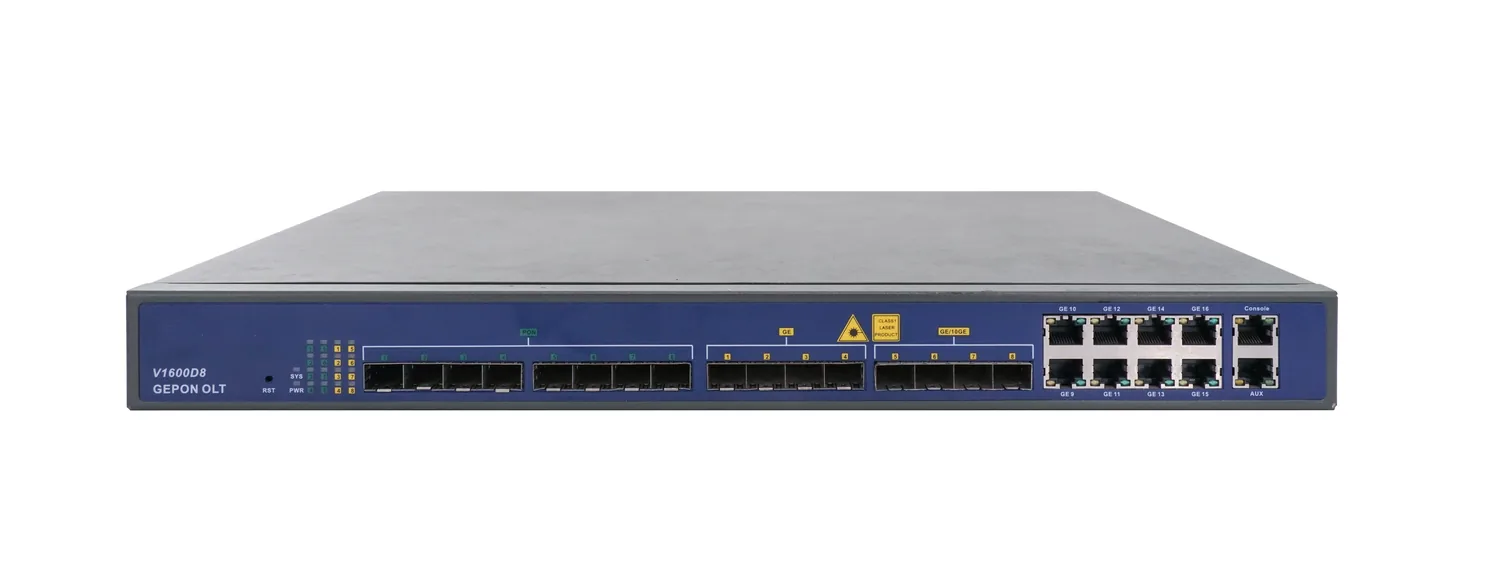
The OLT port also has a maximum ONU count, typically 64. A 1:64 splitter on a port rated for 32 ONUs will not register the extra units. Check both numbers before ordering. The splitter ratio guide covers the loss table, and the V1600D8 model is an example of a published 1:64, 64-ONU-per-port EPON headend with the full datasheet.
Can XGS-PON share an existing GPON ODN?
Yes, with a coexistence element at the headend. XGS-PON uses 1577 nm downstream and 1270 nm upstream; GPON uses 1490 nm downstream and 1310 nm upstream. A WDM coexistence element combines the two onto the same fibre, and a splitter rated across the full band passes both. The coexistence element adds insertion loss, so the optical budget must include it before the split ratio is fixed.
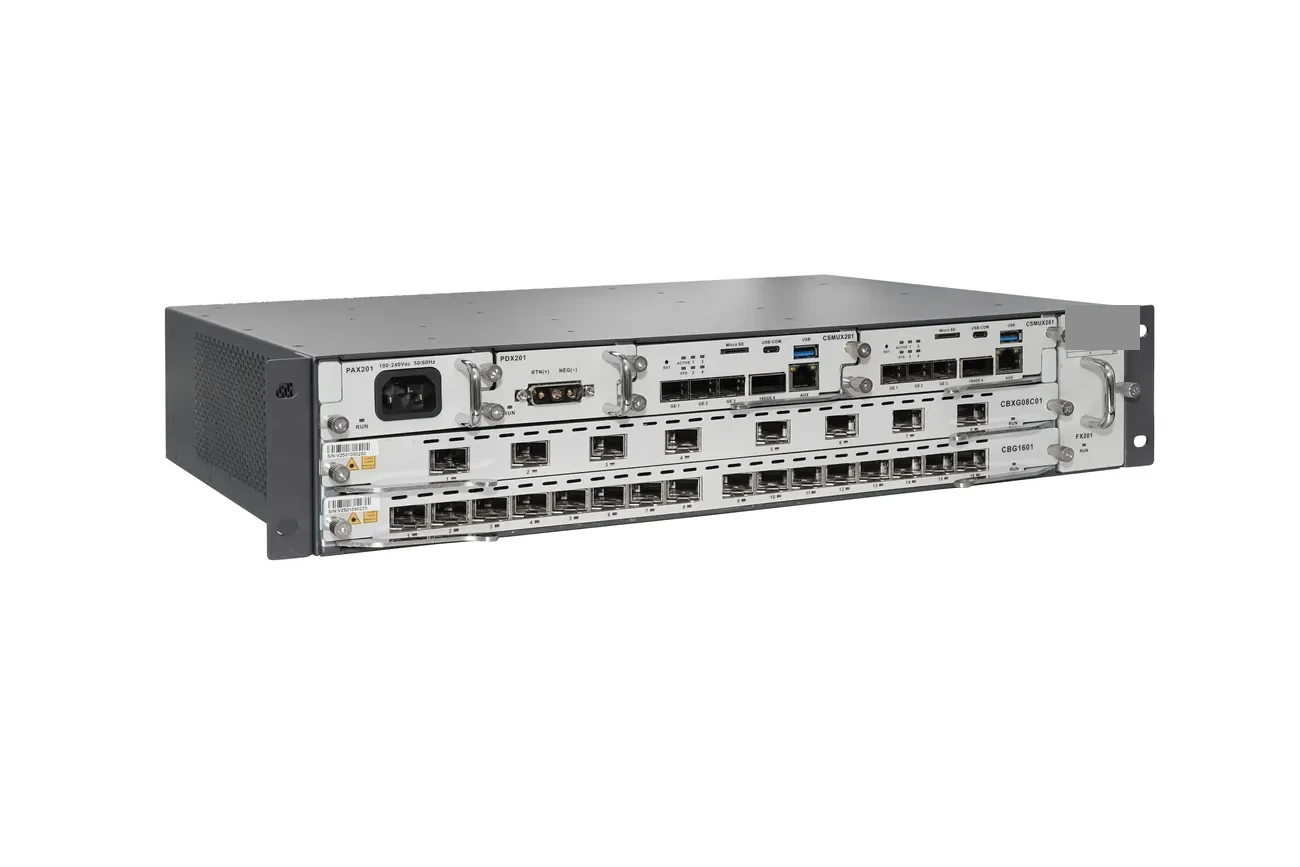
Coexistence is attractive because the trench, the feeder fibre and the splitter can be reused. It is not free: the headend needs the coexistence shelf, the OLT needs the 10G boards, and the ONUs must be XGS-PON for the 10G service. The XGS-PON OLT page covers the board mix and 100GE uplinks; the ODF and enclosure page covers the fibre termination. Keep the GPON and XGS-PON service profiles separate even when they share the ODN.
What breaks when the OLT, ONU and PON mode do not match?
The most common failure is an ONU that supports the right speed but the wrong PON mode. An XGS-PON ONU will not register on an XG-PON port; a GPON ONU will not register on an EPON port; an XPON ONU may support both EPON and GPON, but the profile must be set for the headend in use. The connector polish is the second mismatch: SC/UPC and SC/APC do not mate without a hybrid patch cord, and a mismatch adds loss and reflection.
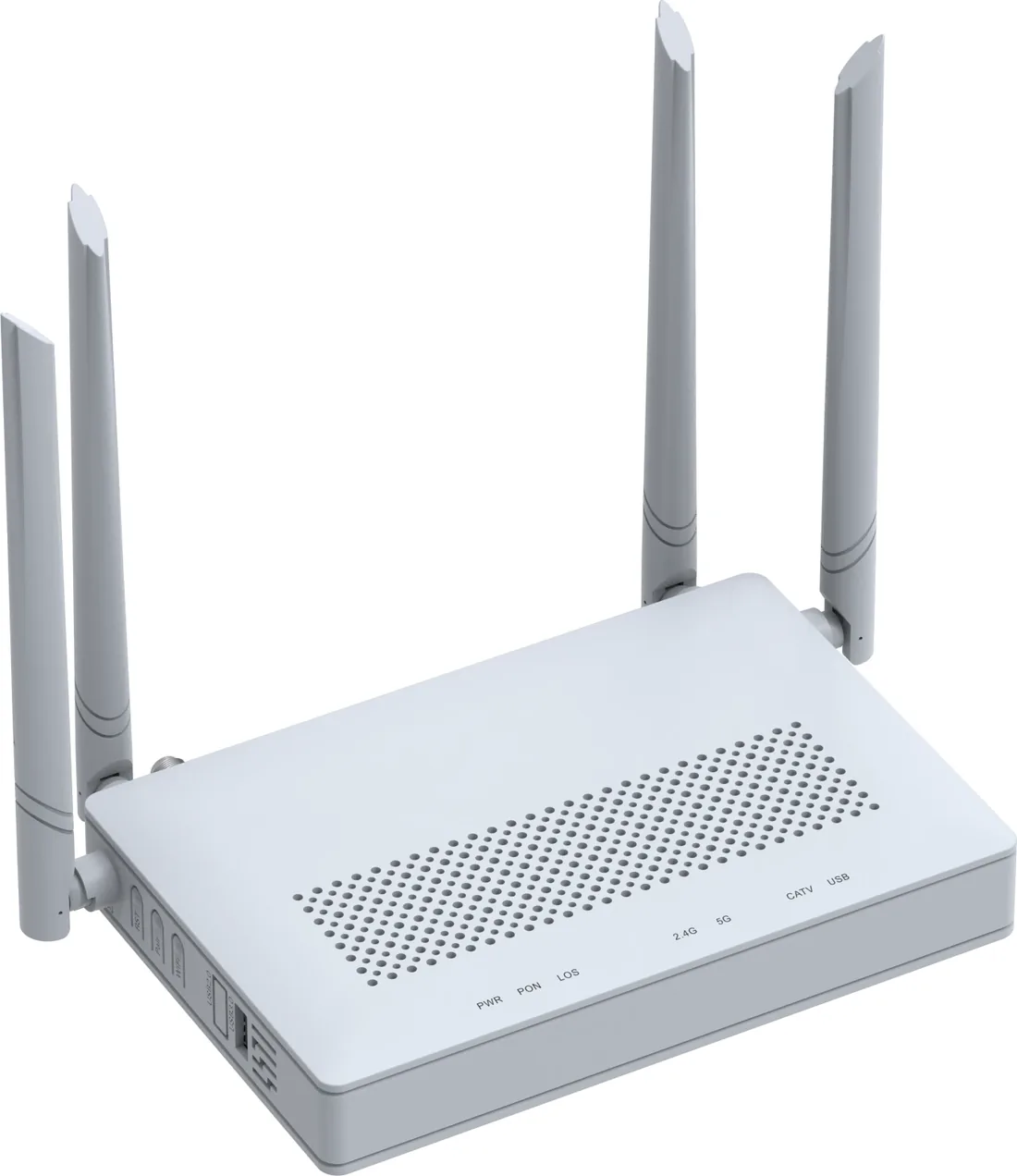
Use the model datasheet to confirm the PON mode, connector polish, management protocol and power. The V2804ACT-A is an XPON ONT with CATV and Wi-Fi 5; the V2804AX15-R is an XPON ONT with Wi-Fi 6. Both work on EPON or GPON when the profile matches; neither turns a GPON OLT into an XGS-PON headend. The OLT and ONU compatibility guide lists the six checks before mixing vendors.
How should an existing GPON network move to 10G?
Start with the service requirement, not the technology. If the existing GPON network is stable and the new demand is a handful of business subscribers, add XGS-PON ports and coexistence rather than replacing the GPON headend. If the whole estate needs multi-gigabit, a 10G chassis with a planned board mix is cleaner than a coexistence shelf on an ageing OLT. In both cases, the ODN must be tested before the upgrade: a splitter or connector that was marginal on GPON will not improve on 10G.
The migration sequence is: measure the existing ODN, confirm the splitter band and connector polish, add the coexistence element, install the 10G boards, provision the 10G ONUs, and move subscribers in groups. Keep the GPON service running until the 10G group is stable. The GPON OLT page covers the existing platform, the 10G PON ONU page covers the subscriber side, and the FTTH application page shows the end-to-end layout.
Which standard fits which project?
The decision table is a starting point. The two questions that change the answer most are the optical budget and the ONU stock: a standard that the local supply chain cannot support is not a practical choice, however good the line rate looks. Confirm the OLT board, the ONU model and the splitter ratio together before the order.
If the project is a hotel, a campus or a CCTV network, GPON or EPON is usually enough. If the service catalogue includes 10G business access, XGS-PON with coexistence is the safer long-term path. Send the site data or ask on WhatsApp with the subscriber count, the longest run and the services; we will return the PON generation, the split ratio and the BOM.
| Project | Recommended standard | Why | Watch-out |
|---|---|---|---|
| Hotel / campus access | GPON or XGS-PON | Mature ONU range; 10G where business services are planned | Split ratio and ONU stock |
| CCTV / private network | EPON or GPON | Symmetric 1.25G EPON is often enough; GPON if ONUs are GPON | Do not mix EPON and GPON ONUs on one port |
| Premium FTTH | XGS-PON | 10G symmetric for multi-gigabit packages | 10GE LAN port and Wi-Fi 6 ONU |
| Downstream-heavy residential | XG-PON | 10G downstream, 2.5G upstream | Upstream plan for video calls and backups |
| Existing GPON ODN upgrade | XGS-PON with coexistence | Reuse the fibre and splitters | Coexistence loss and splitter band |
Standards are not interchangeable on the same port. Confirm the OLT board, ONU mode and splitter before ordering.
Use this on a real site
Send the endpoint count, the longest run, the mains condition and the load. We will apply this calculation to your project and return the optical/power budget with the bill of materials.