
Why is the unit price the wrong basis for comparing PoE and PoF?
A PoE port and a PoF port are not comparable line items. The PoE drop includes the switch, the shared power budget, the copper cable, the conduit, the cabinet, the mains supply, the surge protection and the labour. The PoF drop includes the gateway or OLT port, a share of the splitter and its 120 W supply, the hybrid cable, the PoF ONU and the same protection and labour. The endpoint device may be identical; the power path is not.
The largest cost difference is usually the mains spur, not the cable. A PoE switch still needs mains at the cabinet, but the endpoint camera or AP needs no local socket. If neither has a socket, copper PoE cannot reach beyond 100 m and the design needs an extender or a local cabinet. PoF moves the power source back to the splitter and removes the endpoint mains entirely, within 12 W and 200 m.
A fair comparison also fixes the boundary. Use the same endpoint count, the same route length, the same protection standard and the same five-year horizon. Exclude taxes and freight from both sides or include them in both. A comparison that puts a 30 m indoor PoE drop against a 150 m outdoor PoF drop is not a comparison; it is two different projects.
| Cost line | PoE drop | PoF drop | Compare on |
|---|---|---|---|
| Network port | Switch port and shared PoE budget | Gateway or OLT port and splitter output | Ports actually used, not port count |
| Headend power | Switch supply and UPS | 120 W splitter supply and UPS | Load plus headroom |
| Cable | Cat5e or Cat6 copper, 100 m channel | Hybrid fibre and copper, 200 m port | Route length and cable type |
| Path works | Conduit, tray, outdoor protection | Smaller hybrid cable, conduit, protection | Trenching and restoration |
| Endpoint mains | Socket, spur, weatherproof box, electrician | None at the endpoint | Distance to the nearest board |
| Protection | SPD, bonding, earth | SPD for the 48 V pair, bonding, earth | Exposure and local code |
| Labour | Low-voltage pull and termination | One pull, hybrid termination, PoF ONU | Local rates and access |
| Maintenance | Switch, PoE port, copper damage | Splitter, PoF ONU, optical cleaning | Five-year spares and visits |
The comparison is per endpoint and per route, not per catalogue item.
What goes into the installed cost of a PoE drop?
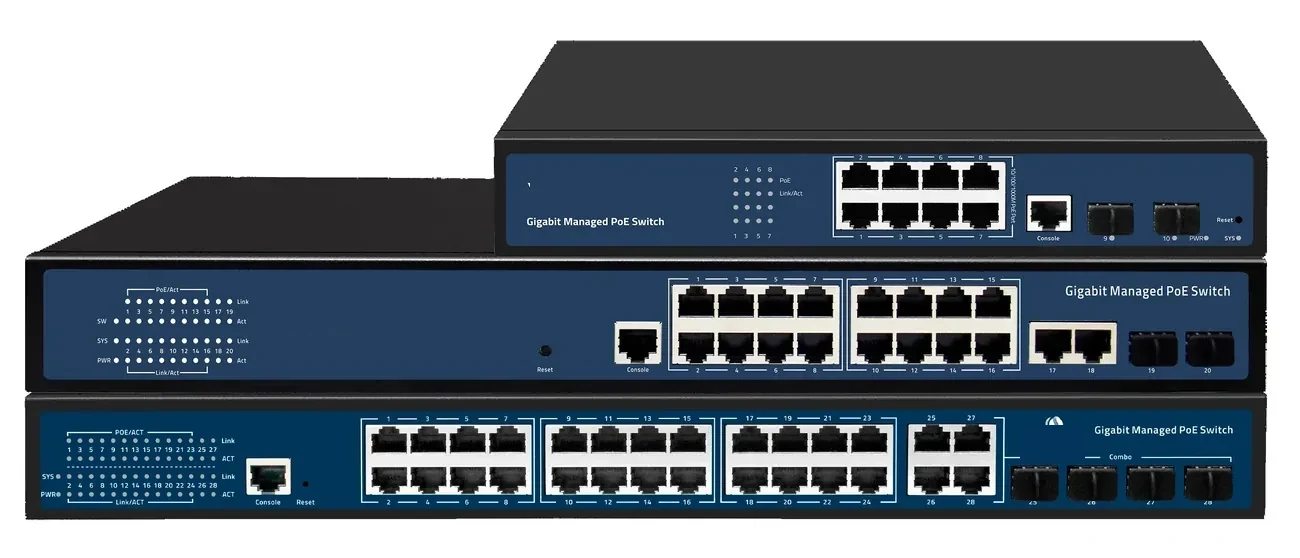
Start with the switch and its total power budget. A 24-port PoE switch with a 370 W budget can run 24 cameras at about 12 W within budget, but not 24 PTZ cameras at 30 W. If the load exceeds the budget, the cost line is a larger switch or a second switch, not a bigger port label. The switch also needs a ventilated, protected location with mains and, on a critical site, a UPS.
The cable is a 100 m channel including patch cords, so the permanent link is limited to 90 m. Category affects bandwidth and voltage drop, not distance. A 30 W load at 48 V draws about 0.63 A; a 100 m loop of 24 AWG copper can drop about 12.6 V, leaving roughly 35 V at the device. A camera that needs 44 V will fail at night even though the link is electrically continuous. The voltage-drop method is in the PoE distance guide at /resources/poe-distance-limit/.
Then add the path works: conduit, tray, fire stopping, outdoor gel-filled cable, a weatherproof enclosure if the switch is outside, and surge protection at the building entry. The copper run is also the lightning path, so the SPD and the bonding are part of the PoE installed cost, not an optional extra. Labour includes pulling, terminating, testing and labelling; an electrician is needed for the cabinet supply, not for each camera.
A worked budget check: eight cameras at 10 W peak need 80 W at the switch, plus cable loss and 20% headroom, about 110 W. An 8-port switch with a 120 W budget is adequate; a 60 W budget is not. The switch cost line follows the budget, not the port count.
What goes into the installed cost of a PoF drop?
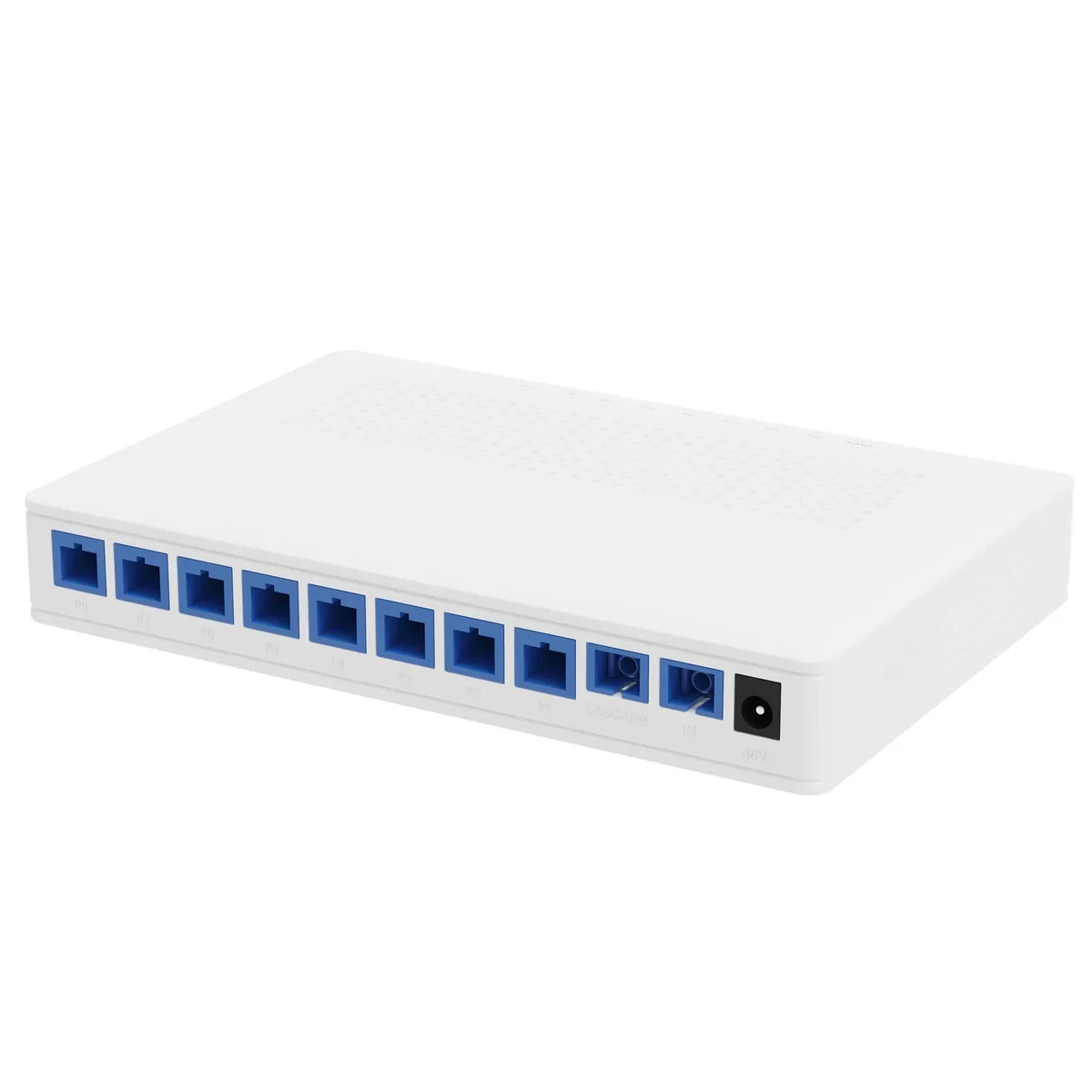
A PoF splitter has eight powered outputs plus one cascade port, takes 48 V DC from a 120 W supply and delivers up to 12 W per output to 200 m. Allocate the splitter, the supply and the headend port across the outputs actually used. If only four of eight outputs are used, the per-endpoint share is higher; if all eight are used, the headend hardware is shared eight ways. That allocation is the first line that a unit-price comparison usually misses.
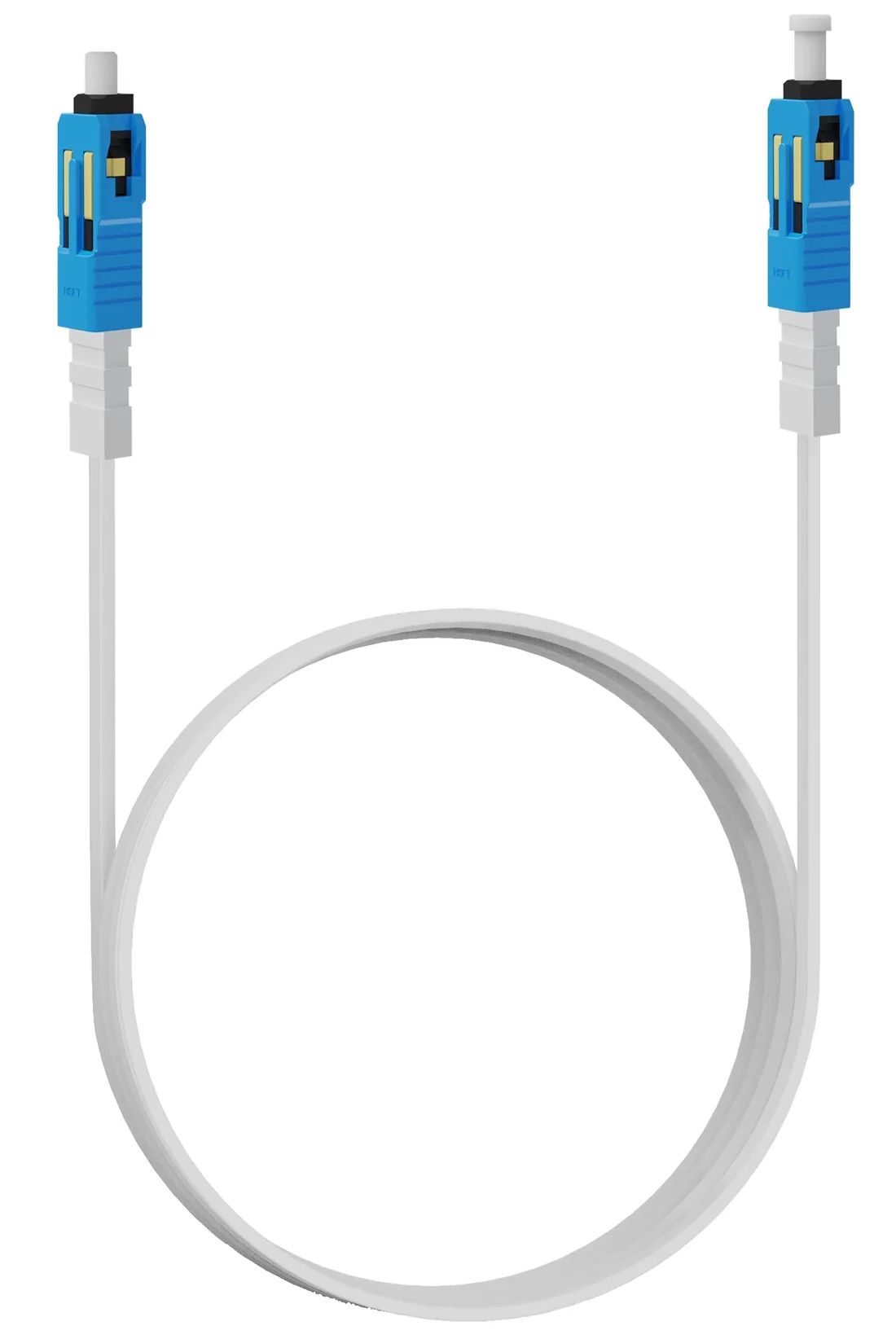
The cable is a hybrid: one G.657A2 fibre and a copper pair in a flat jacket, factory-terminated SC/UPC, with standard lengths of 3, 20 and 50 m and custom lengths available. It fits behind ceiling tiles and through smaller conduit than a copper Ethernet bundle, and one pull carries both data and power. The copper pair still needs surge protection at the building entry, and the enclosure at the endpoint still needs to be IP-rated outdoors.
The limit is the cost boundary. Above 12 W per port or beyond 200 m, PoF is not an option at any installed cost, so the comparison stops and the design moves to a local PoE switch or a mains feed. Below the limit, the saving is the avoided mains spur, the avoided electrician visit and the shorter copper path; the additional cost is the splitter, the hybrid cable and the PoF ONU. Whether the net is lower depends on the local cost of trenching and electrical work.
How do you build a fair side-by-side estimate?
Build a bill of quantities per endpoint, then price it with local rates. The sequence is: count endpoints and routes; choose the optical and power architecture; list the equipment per endpoint and per headend; list the path works in metres; list the protection and earthing items; add commissioning and testing; add spares; add five-year maintenance; add a contingency for unknown route conditions.
Use the same route for both options even if the technologies would take different paths. A PoF hybrid cable may fit a smaller conduit, and that is a legitimate saving; a PoE copper run may need a repeater cabinet, and that is a legitimate cost. Record the assumption next to the line so the buyer can challenge it. If the site has no mains at the endpoint and the route is 140 m, the PoE option is not a 100 m copper drop; it is a copper drop plus an extender plus a midpoint supply, and the estimate must show all three.
Labour rates vary more than hardware. In one market an electrician may be inexpensive and a low-voltage installer scarce; in another the reverse. Use local day rates and a realistic crew size. A two-person crew that needs a scissor lift costs more per hour than a crew working from a ladder, and the PoF option may avoid the lift entirely if the splitter is indoors and the ceiling tiles are accessible.
| Estimate line | PoE quantity | PoF quantity | Basis |
|---|---|---|---|
| Headend ports | Switch ports used | OLT or gateway ports and splitter outputs | Endpoint count plus spare |
| Power supply | Switch budget and UPS | 120 W supply per splitter and UPS | Connected peak plus 20% |
| Cable | Copper metres, 100 m channel | Hybrid metres, 200 m port | Measured route plus loops |
| Path works | Conduit, tray, trench, restoration | Conduit, tray, trench, restoration | Same route for both options |
| Endpoint power | Socket, spur, enclosure, electrician | None | Distance to the nearest board |
| Protection | SPD and bonding | SPD for the 48 V pair and bonding | Local code and exposure |
| Labour | Pull, terminate, test | Pull, terminate, test, PoF ONU | Local rates, access method |
| Spares | Switch and copper | Splitter, PoF ONU, hybrid cable | Criticality and site size |
Price the same scope on both sides. A missing line is a biased comparison.
What does a worked eight-camera comparison show?
Take eight fixed cameras at 8 W nominal and 10 W peak, mounted on poles 140 m from the building, with no mains at the poles. The route is one side of an access road, so trenching is possible but disruptive. Option A is PoE with one extender at the midpoint; option B is fibre to a local cabinet with an 8-port PoE switch; option C is a PoF splitter in the building with a hybrid cable to each pole.
The cost shape is clear without inventing prices. Options A and B each need a mains spur, an electrician and a powered outdoor enclosure; option C needs none of those, but it needs eight custom hybrid runs, eight PoF ONUs and a splitter with a 120 W supply. If trenching and electrical work are expensive, C wins on installed cost. If the poles are within 90 m of a powered cabinet, the PoE option drops the extender and the midpoint supply, and A becomes the cheaper path.
The break-even is not a single number. It is the point where the avoided mains work, electrician time and outdoor enclosure cost exceed the additional PoF hardware and cable. On a site where the electrical contractor is already mobilised and the trench is open for other services, that point moves; on a leased site where a new spur needs approval, it moves the other way. The estimate should show the crossover, not hide it in one total.
Maintenance over five years should include one SPD check per year, one connector clean and inspect per PoF endpoint, one fan or filter check if the switch has fans, and a spare splitter or switch. A PoE site with eight outdoor cameras and no spare switch may need a next-day replacement; a PoF site with one splitter and eight ONUs should keep one spare splitter. Both are real cost lines; neither appears on a unit-price quote.
| Quantity | Option A: PoE and extender | Option B: fibre and local switch | Option C: PoF |
|---|---|---|---|
| Powered outdoor points | 1 midpoint enclosure | 1 local cabinet | 0 at the poles |
| Mains work | Spur to midpoint, 70 m | Spur to cabinet, 140 m | None at the poles |
| Copper cable | 140 m Cat5e or Cat6 plus patch cords | 8 short drops from the cabinet | 0 copper Ethernet |
| Fibre or hybrid cable | 0 | Fibre uplink to the cabinet | 8 hybrid runs, 140 m each |
| Switches or splitters | 1 PoE switch, 1 extender | 1 PoE switch, 1 fibre uplink | 1 PoF splitter, 1× 120 W supply |
| Endpoint adapters | None | None | 8 PoF ONUs or PoF APs |
| Protection | SPD at entry and midpoint | SPD at entry and cabinet | SPD at entry, 8 pole enclosures |
| Electrical labour | Electrician for the midpoint | Electrician for the cabinet | Low-voltage installer, no endpoint electrician |
Indicative quantities for method comparison, not a quotation. Recalculate with local rates.
Which cost lines are usually underestimated?
The first is trenching and restoration. A mains spur is not a cable; it is a permit, a trench, a duct, backfill and surface repair. The second is the electrician and the inspection, which may be a separate mobilisation from the low-voltage installer. The third is the weatherproof enclosure and the earthing at the endpoint, especially on a pole where the housing must be bonded.
The fourth is protection. A PoE run to a pole needs an SPD at the building entry and often at the pole; a PoF run needs an SPD for the 48 V pair and the same bonding. The fifth is the UPS: a PoE switch and a PoF splitter both need backup if the service must survive an outage. The sixth is commissioning: optical power measurements, per-port records and a load test take time, and a design that skips them pays later in truck rolls.
There is also a change cost. A PoE site that adds a 30 W PTZ may need a larger switch budget; a PoF site that adds a 20 W AP cannot use the 12 W port and needs a local supply. The architecture that is cheaper today can be more expensive after two device upgrades, so the comparison should include a plausible growth scenario, not only the day-one bill.
| Underestimated line | Why it is missed | Mitigation |
|---|---|---|
| Trenching and restoration | Quoted as cable metres, not civil work | Separate civil line and permit allowance |
| Electrician mobilisation | Assumed to be part of low-voltage labour | Price the electrical connection separately |
| Weatherproof enclosure | Forgotten when the device is outdoors | One enclosure and gland kit per outdoor point |
| SPD and earthing | Treated as optional | Include in the protection line for both options |
| UPS | Sized for the switch, not the load | Size for connected peak plus runtime |
| Commissioning | Assumed to be a walk-through | Budget test time and as-built records |
| Spares | Bought after the first failure | One splitter or switch per critical site |
The hidden lines are usually the difference between the two options, not the hardware.
Which option wins on installed cost, and when?
The decision table is a starting point, not a substitute for the estimate. The two questions that change the answer most are whether mains is present at the endpoint and how much civil work the mains spur needs. Load and distance set the technical envelope; the local cost of electrical work sets the commercial result.
A mixed site is normal. Use PoE for the cameras within 100 m of a powered cabinet, PoF for the isolated 8–12 W points with no mains, and fibre plus a local switch for clusters and higher loads. Keep the two power domains separate, document which device belongs to which domain, and price the protection for both. The installed cost of the mixed design is usually lower than forcing one technology across the whole site.
| Situation | First choice | Why | Cost watch-out |
|---|---|---|---|
| 80 m or less, mains at endpoint, 15 W or less | PoE | Cheapest port and cable; no civil work | Voltage drop on thin cable |
| 100 m or less, mains, 15–30 W | PoE 802.3at | Standard and familiar | Switch budget and heat |
| 100–200 m, no mains, 12 W or less | PoF | One hybrid cable, no endpoint socket | Splitter, PoF ONU, custom lengths |
| 100–200 m, no mains, above 12 W | Fibre plus local switch and mains | PoF cannot carry the load | Mains spur and cabinet |
| Over 200 m, any load | Fibre plus local switch | PoF and copper both stop | Cabinet, power, uplink |
| Cluster of 8 or more at 150 m | Fibre plus local switch | One cabinet serves many devices | Cabinet cost against eight PoF runs |
If the site already has a powered cabinet within 90 m, PoE is usually the lowest installed cost.
What should a cost comparison deliver to the buyer?
A useful comparison has an assumptions page, a quantity take-off, local rate lines, exclusions, a sensitivity check, a five-year view and a decision table. It should state the route length, endpoint count, load per endpoint, mains condition and protection standard. It should show the civil and electrical lines separately, because those are the lines that decide the result.
It should also state what is not included: taxes, freight, permits, utility connections, structural work and any change to the building electrical system. A comparison without exclusions is not comparable. If the buyer needs a budget figure, give a range with the assumptions that move it, not a single number that hides the mains spur.
The last page should be a recommendation with two alternatives, not a single forced choice. The buyer may have a preferred contractor, an existing switch stock or a planning condition that changes the cost. The engineering recommendation is the path that fits the load, distance and mains condition; the commercial choice belongs to the buyer once the assumptions are visible.
Use this on a real site
Send the endpoint count, the longest run, the mains condition and the load. We will apply this calculation to your project and return the optical/power budget with the bill of materials.